Museo V: Memory, Art, and Resistance Against Gender-Based Violence in Cuba
Cuban journalist and writer María Matienzo, director of this virtual space, explains why the project goes beyond the traditional museum format.
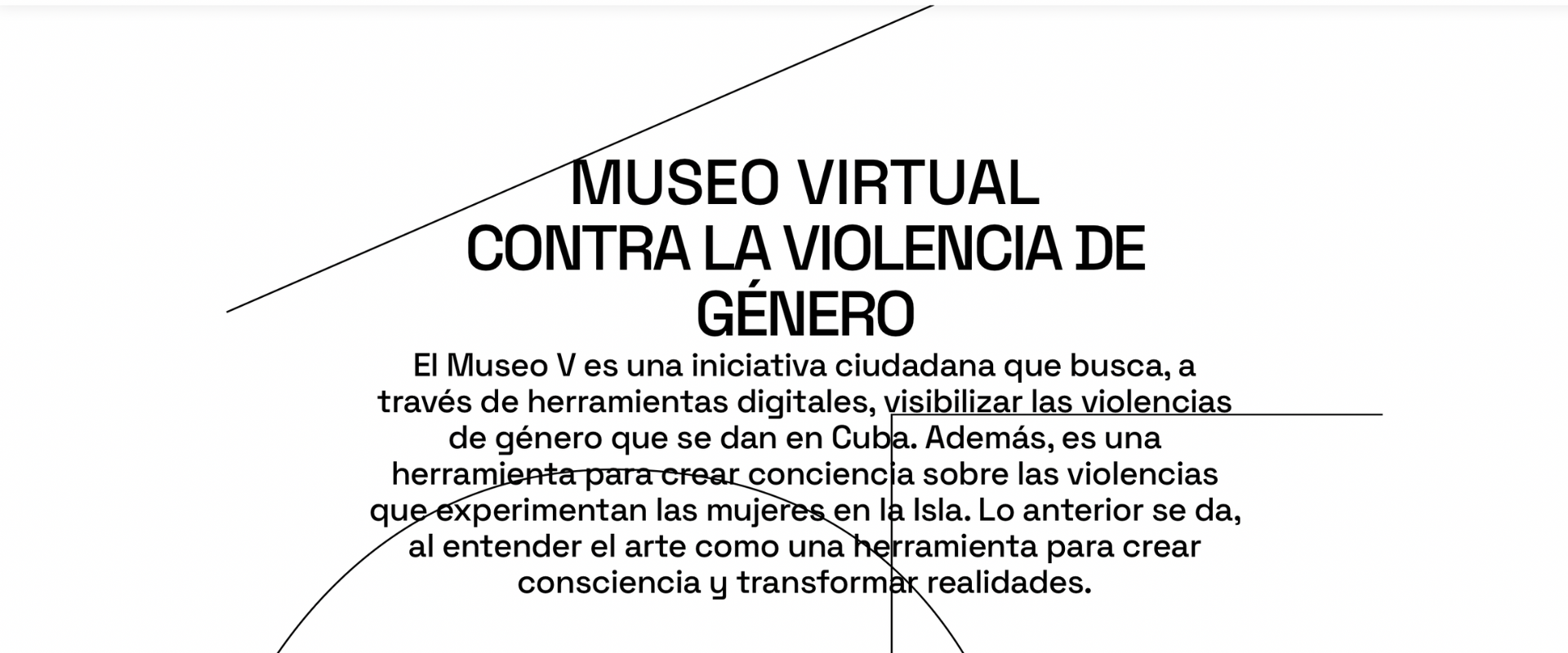
Washington, D.C., January 27, 2026 — In a context marked by repression and the silencing of gender-based violence in Cuba, the Virtual Museum of Memory Against Gender-Based Violence—known as Museo V—was created in 2022. Led by Cuban journalist and writer María Matienzo, now living in exile in Madrid, the project transcends the traditional museum format to establish itself as a platform for denunciation, reflection, and collective creation, grounded in a feminist, anti-racist, and intersectional perspective.
Museo V initially emerged as a proposal to make political violence in Cuba visible, particularly violence against women and people with diverse gender identities and sexual orientations. Over time, the project expanded its scope by incorporating the participation of creators and activists from other countries in the region, as well as the analysis of international contexts through various human rights–focused workshops.
The museum functions as a space for exchange and collective construction. “It is a space where people go to give, to contribute, and to receive information,” explains its director. This work is grounded in a clear political stance: an intersectional and anti-racist approach that runs through all of its actions. “There is no perspective within the museum that is not anti-racist. This is one of the major battles that the people of Cuba and the rest of the world must fight.”
Museo V brings together artists and creators working from geographic, political, and symbolic margins, contributing diverse and critical perspectives. One of the project’s central goals is to insert Cuba into global conversations, breaking the imposed silences around political and gender-based violence that have historically been denied or rendered invisible.
Due to the impossibility of having a physical space on the island, the museum exists exclusively in a virtual format. However, its vocation remains deeply Cuban. “We do not consider ourselves a virtual museum for migration or exile. We consider ourselves a virtual museum for Cuba—a Cuba that needs to return to what it once was culturally: vanguard, revolutionary,” Matienzo states.
The workshop on political violence based on gender, led by attorney Laritza Diversent of the organization Cubalex, holds a central place within Museo V and is one of the contents most highlighted by its director. “This workshop is important because it is, practically, the very reason for the museum’s existence,” Matienzo affirms, underscoring the value of expert voices that today work from exile after being persecuted by the Cuban regime.
At Race and Equality, we highlight initiatives like this that document and narrate the experiences of women and people with diverse sexual orientations and gender identities. We call on the authoritarian regime in Cuba to guarantee their protection and respect their rights, putting an end to repression and the multiple forms of violence they face—especially when they challenge state policies.
To learn more about this space, visit its website at museov.org and follow its content on social media at @museovbg.