The Long Cuban Night, a documentary on repression in Cuba, premieres Saturday, April 11 at the Miami Film Festival
The film, which received support from Race and Equality, arrives at a particularly complex moment for the island, amid the worsening social, political, and economic crisis.
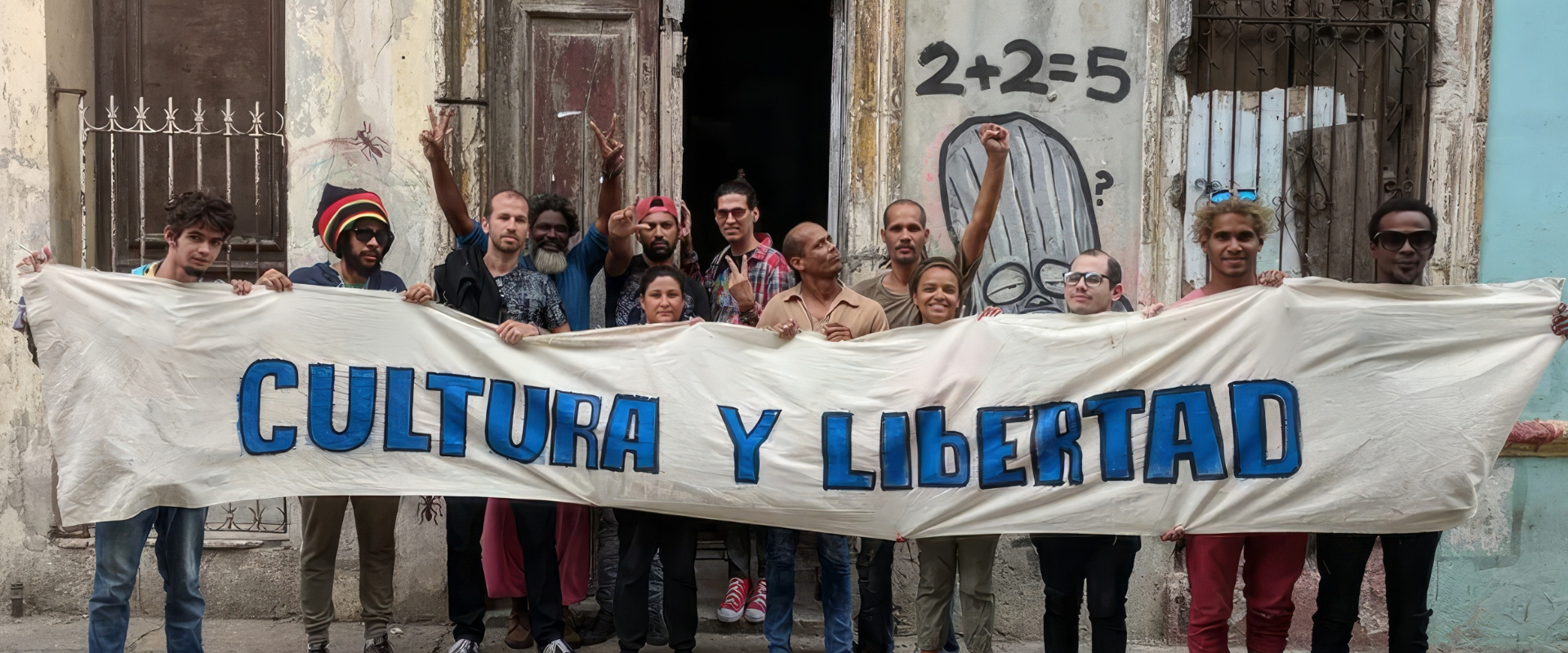
Washington, D.C., April 7, 2026 – The Long Cuban Night (2026, 100 min.), the first feature-length documentary by Cuban director and sound designer Sergio Fernández Borrás, will have its world premiere at the 43rd Miami Film Festival (MFF), taking place from April 9 to 19. The screening is scheduled for Saturday the 11th at 5:45 p.m. at Silverspot Cinema, Room 13, where it will also compete for the Documentary Achievement Award.
The film arrives at a pivotal moment for Cuba, marked by the intensification of state repression and the deterioration of living conditions on the island. In this context, Race and Equality supported part of the production of this documentary, reaffirming its commitment to the promotion of human rights and freedom of expression. Through a powerful and deeply immersive aesthetic approach, the film constructs a narrative that places surveillance, harassment, and the criminalization of dissent at its center.
Co-produced in Spain (Free Media), Cuba (Uranio Films), and Colombia (Casatarantula), and distributed by Habanero Films, the documentary is built entirely from archival material, including internet livestreams, cellphone recordings, and television broadcasts. Created over four years and conceived entirely in vertical format, the film embraces an aesthetic consistent with the devices used to capture these events, reinforcing its immediacy and testimonial character. This approach allows for the reconstruction, from within and without mediation, of some of the most significant episodes of recent repression in Cuba.
These include the harassment and imprisonment of rapper Denis Solís in 2020; the actions led by artist Luis Manuel Otero Alcántara and the San Isidro Movement demanding his release; as well as the police siege against this independent creative space. The documentary also captures the events that followed, including the November 27 protest, the January 27 demonstrations, and the social uprising of July 11, 2021, as well as the arrests of figures such as Otero Alcántara and musician Maykel Osorbo.
Rather than adopting an expository or didactic tone, Fernández Borrás creates a sensory experience that avoids traditional chronology or a historicist recounting of events. The film unfolds as a sequence of fragments that, taken together, reveal the intensity of state surveillance and the fragility of spaces of freedom on the island.
“As a living archive, the film portrays a community of artists, activists, and citizens who decided to say ‘enough’ in the face of abuse of power. More than documenting a conflict, The Long Cuban Night addresses one of the most important moments in Cuba’s recent history: the beginning of a civic awakening marked by dignity, collective strength, and an urgent need for freedom,” said Sergio.
One of the most notable aspects of The Long Cuban Night is its ability to capture the everyday dimension of repression. It is not only about major events, but also about the persistent sense of surveillance, the fear that permeates daily life, and the resistance that emerges within this context. The film thus positions itself at the intersection of political cinema and living archive, where images not only document, but also challenge.
The premiere of The Long Cuban Night at the Miami Film Festival not only represents a milestone for Latin American documentary filmmaking, but also an opportunity to amplify the voices of those who have been silenced on the island. In a context where censorship and persecution severely restrict the exercise of fundamental freedoms, cinema becomes a powerful tool for memory, denunciation, and justice.
Race and Equality celebrates the screening of this documentary, which portrays repression on the island, a situation that has worsened significantly in recent months due to power outages, shortages of food and medicine, and growing social unrest. From Race and Equality, we will continue to monitor the situation in Cuba and denounce the deep crisis affecting the country, reiterating our call on the international community to maintain attention on Cuba and demand full respect for human rights.