Cuba’s Authoritarian Regime Forces Cuban Activist Leticia Ramos, Member of the Ladies in White, into Exile
The human rights defender was forced to return to Miami after being driven into exile.
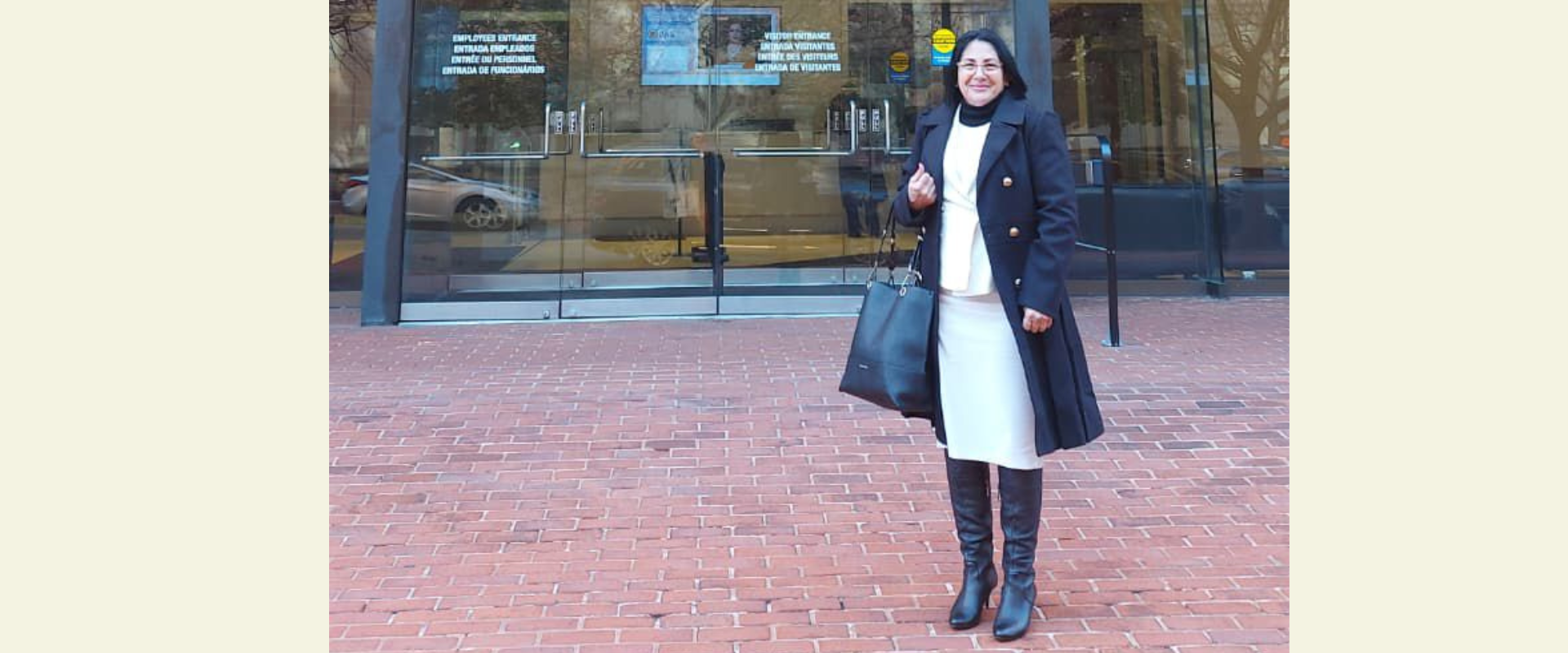
Washington, D.C., February 10, 2025 — On Monday, February 9, Cuba’s authoritarian regime barred Cuban activist Leticia Ramos, a member of the Ladies in White movement, from entering the country, forcing her into exile. Ramos traveled from the United States to Cuba, but once there, authorities denied her the right to reunite with her family, withheld her luggage, and ordered her to leave the country, forcing her to return to Miami.
Last January, during an interview with Race and Equality, Ramos expressed her fear that the Cuban regime would deny her return to the Island after traveling to the United States to receive medical treatment, a systematic practice used to silence, punish, and force activists into exile. That fear became a reality yesterday. From the Institute, we are accompanying her and have assumed her legal representation in this process, just as we have provided ongoing support to the members of the Ladies in White before the Inter-American Commission on Human Rights (IACHR), which since October 2013 has granted precautionary measures “to preserve the life and personal integrity” of the women who make up the collective.
Between Resistance and Repression
Leticia Ramos has been a member of the Ladies in White since 2004, when she joined as a supporting member, accompanying women whose relatives were imprisoned during the Black Spring of 2003. Since then, she has consistently taken part in peaceful actions—such as attending Mass dressed in white and carrying flowers—to demand the release of individuals imprisoned for political reasons in Cuba.
Following the death under “suspicious circumstances” of Laura Pollán, founder of the movement, in 2011, Leticia was elected coordinator of the Ladies in White group in the province of Matanzas. From that point on, state harassment intensified, including beatings, threats, constant surveillance, arbitrary detentions, and restrictions on her right to freedom of movement. For nearly nine years, she was subjected to travel restrictions and barred from leaving the country.
Reprisals also extended to her family. Ramos is the mother of two children: one who resides in the United States, and another, Randy Montes de Oca Ramos, who lives in Cuba and has been subjected to persecution, detentions, and criminal proceedings based on false charges, as a means of pressuring his mother to abandon her activism. In 2018, Randy served a six-month sentence of house arrest following public protests carried out by Leticia.
Between 2013 and 2018, Ramos was detained on numerous occasions, at times being deprived of her liberty up to four times in a single week. She attempted to document these acts of repression, but the information was lost following raids on her home in 2016, 2018, and 2019, during which state agents confiscated work materials, electronic devices, and items linked to her activism.
During the protests of July 11, 2021, Leticia decided to demonstrate in Cárdenas despite her family facing a severe case of COVID-19. In that context, she recalled that it was possible to perceive “the regime’s fear in the face of an unarmed people, but one determined to achieve its freedom.”
The forced exile of Leticia Ramos is part of a broader pattern of repressive practices used by the Cuban regime to punish human rights defenders through forced exile, family separation, and constant intimidation.
At Race and Equality, we recognize the trajectory, courage, and resilience of Leticia Ramos, and we reiterate our commitment to accompany her and to denounce this serious violation of her human rights, as well as the broader strategy of silencing activists in Cuba.