Organizations denounce invisibility and structural discrimination against Roma peoples in the region in historic hearing before the IACHR
Guatemala City, March 12, 2026.– Organizations that promote and defend the rights of the Roma population in the Americas, especially in Argentina, Brazil, Colombia, and the United States, appeared before […]
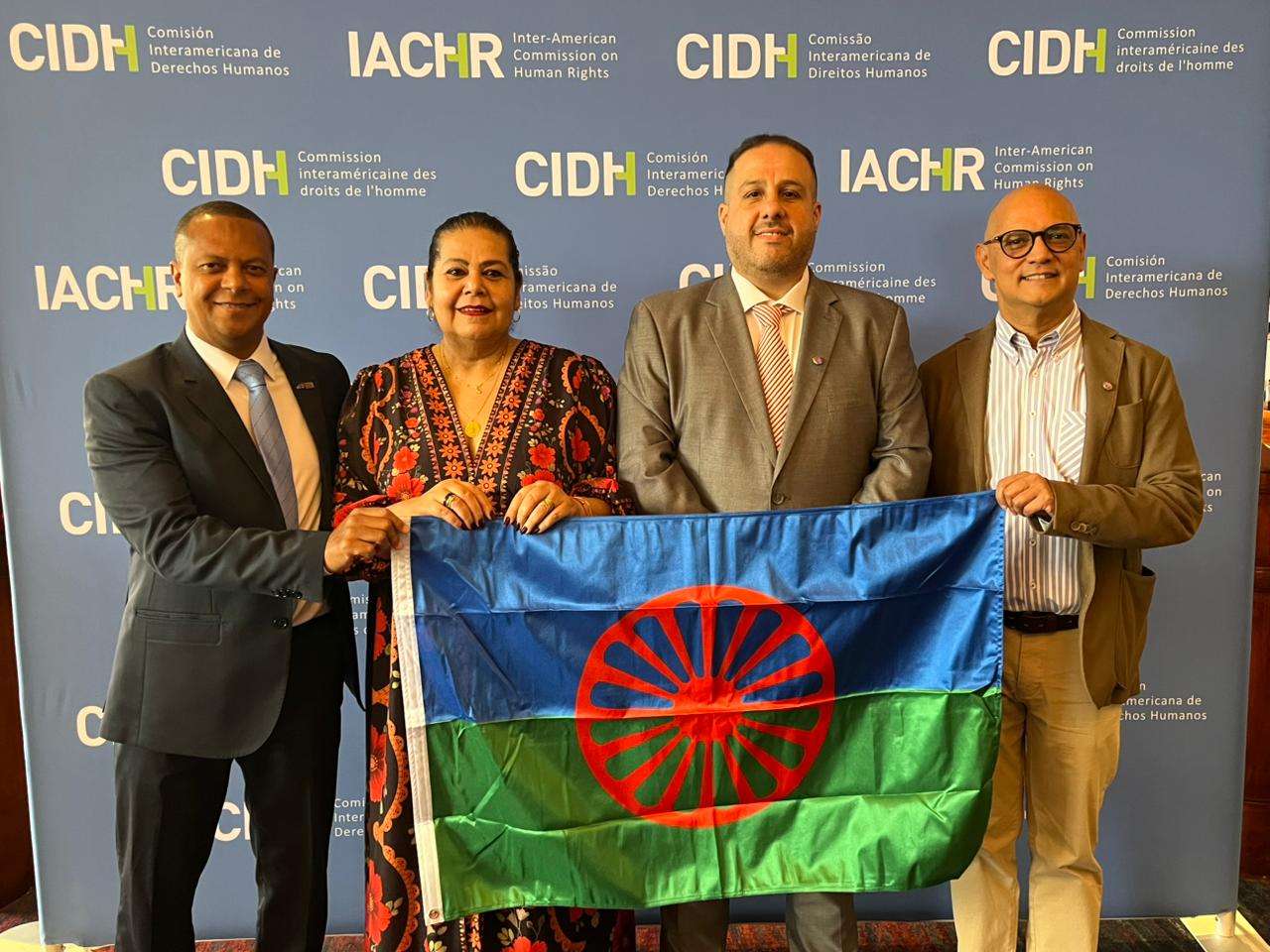
Guatemala City, March 12, 2026.– Organizations that promote and defend the rights of the Roma population in the Americas, especially in Argentina, Brazil, Colombia, and the United States, appeared before the Inter-American Commission on Human Rights during its 195th Session, held from March 9 to 12 in Guatemala City, to present the human rights situation faced by this population in the region.
The hearing—which was convened ex officio and included the participation of 13 civil society organizations, including the Institute on Race, Equality, and Human Rights (Race and Equality)—was historic as it was the first in the history of the IACHR dedicated exclusively to addressing the human rights situation of Roma peoples and communities, also known as Gypsies, Romani, or Rom.
During the session, representatives of organizations from Brazil, Argentina, Colombia, Canada, and the United States warned of the persistent invisibility, structural racism, violence, and barriers that Roma people face in accessing fundamental rights such as health, education, and justice. They also denounced the lack of official data, specific public policies, and state measures to combat anti-Gypsyism in the region.
Among the notable interventions was that of Elisa Costa, from the Maylê Sara Kalí International Association (AMSK) in Brazil, who warned of the disproportionate impact of discrimination and violence on Romani women.
“I start from a non-negotiable principle: human rights are indivisible. Violence disproportionately affects the Roma people, especially women, children, and the elderly,” Costa said.
The activist explained that, in the absence of comprehensive official statistics, her organization has worked with microdata from public policies to assess the vulnerability faced by these communities. She said that as of 2025, at least 3,417 Roma children between the ages of 0 and 4 have been registered as being in a situation of extreme social vulnerability in Brazil, a situation that also reflects the precariousness faced by their mothers and families.
Costa explained that the available data reveal a critical concentration of this population in vulnerable conditions in a few states of the country and warned that Roma women are particularly affected throughout their life cycle. He also pointed out that many reports of violence occur in extended family contexts, which requires culturally appropriate state responses that currently do not exist.
In this context, she stressed that Romaphobia and anti-Gypsyism must be recognized as expressions of structural racism in Brazil and in the region, and urged states to adopt measures to combat these forms of discrimination.
Among her recommendations to the IACHR, Costa called for the recognition of August 2 as Roma Holocaust Day, the promotion of affirmative action campaigns against anti-Gypsyism, and support for historical memory initiatives such as the Map of Romani Memory in the Americas.
For his part, Damián Cristo, from the Association for the Rights of the Gypsy/Romani People (ZOR) of Argentina, warned of the multiple obstacles faced by this population in fully exercising their rights. “Access to health care for our families is almost impossible,” he said during his speech.
Cristo explained that the situation of Roma communities in Argentina is marked by statistical invisibility, difficulties in accessing health services, barriers to justice, school dropout rates, and a lack of targeted public policies.
In terms of education, he warned that the Argentine school system has failed to fully integrate Roma children and young people, who face high levels of school dropout, in many cases linked to the lack of content that respects their cultural identity and to situations of harassment based on their ethnic origin.
He also stressed the importance of the right to memory and called on the Argentine State to officially recognize August 2 as the Day of Remembrance of the Gypsy Holocaust, as well as to promote the recognition of April 8 as International Roma Day.
Representatives of various organizations in the region also spoke during the hearing. Rogério Ribeiro, from the Brazilian Network of Gypsy Peoples, referred to recent cases of violence that have affected Roma communities in northeastern Brazil. Daiane Rocha, from the National Association of Gypsy Ethnic Groups of Brazil (ANEC), expressed her gratitude for this space for dialogue to highlight the difficulties faced by these communities in Latin America and the Caribbean.
From Colombia, Ana Dalila Gómez Baos, from the Kumpania Rrom organization in Bogotá, highlighted some progress in the recognition of the rights of the Rrom people in the country, although she pointed out that more action is still needed to combat discrimination and guarantee the full exercise of their rights.
Similarly, Deny Dobrov, Director of International Relations for the World Roma Federation, warned that Roma communities also face structural discrimination in the United States, which often remains hidden because many Roma people choose to conceal their identity to avoid stigma and stereotypes. He explained that the limited public recognition of Roma as an ethnic minority in that country contributes to perpetuating anti-Roma narratives that influence social perceptions and institutions.
Dobrov also expressed concern about the persistence of anti-Roma stereotypes in some law enforcement training materials and in investigative contexts, which could encourage ethnic profiling practices. In this context, he urged States to explicitly recognize Roma communities in anti-racism policies, strengthen collaboration with Roma-led organizations, and promote secure self-identification mechanisms that enable the design of more effective public policies.
Representatives of the international human rights system also participated in the session. Claude Cahn, Human Rights Officer at the Office of the United Nations High Commissioner for Human Rights (OHCHR), referred to the difficulties in adequately documenting the violence affecting this population.
At the close of the hearing, the IACHR commissioners recognized the historical importance of this space. Commissioner Gloria de Mees, rapporteur on the rights of people of African descent and against racial discrimination, noted that the Romani people have remained invisible despite their contributions to society, while Commissioner Marion Bethel, rapporteur on women’s rights, expressed concern about the forms of gender-based violence that particularly affect Romani women.
After the hearing, the IACHR thanked the organizations for their participation and reaffirmed its commitment to listen to and give visibility to the voices of Roma peoples in the region, highlighting that these communities have faced historical and intergenerational discrimination. It also stressed the importance of States including this population in national censuses and using the data collected to develop public policies that respond to their needs and guarantee their rights.
The hearing marked a significant step toward raising awareness of the situation of Roma peoples in the Americas and advancing the recognition of their rights in the inter-American human rights system. At Race and Equality, we highlight the importance of this historic moment and reiterate our commitment to continue accompanying Roma communities and organizations in the region in their efforts to raise awareness of the structural discrimination they face and promote the recognition and effective protection of their human rights.