Thematic Hearing Before the Inter-American Commission on Human Rights on the Rights of LGBTI People in Cuba
Photo courtesy of OAS photographer Daniel Cima, licensed under CC BY 2.0. Washington DC, Monday, October 19, 2015 Independent Cuban LGBTI activists, in coordination with the Institute for Race, Equality […]
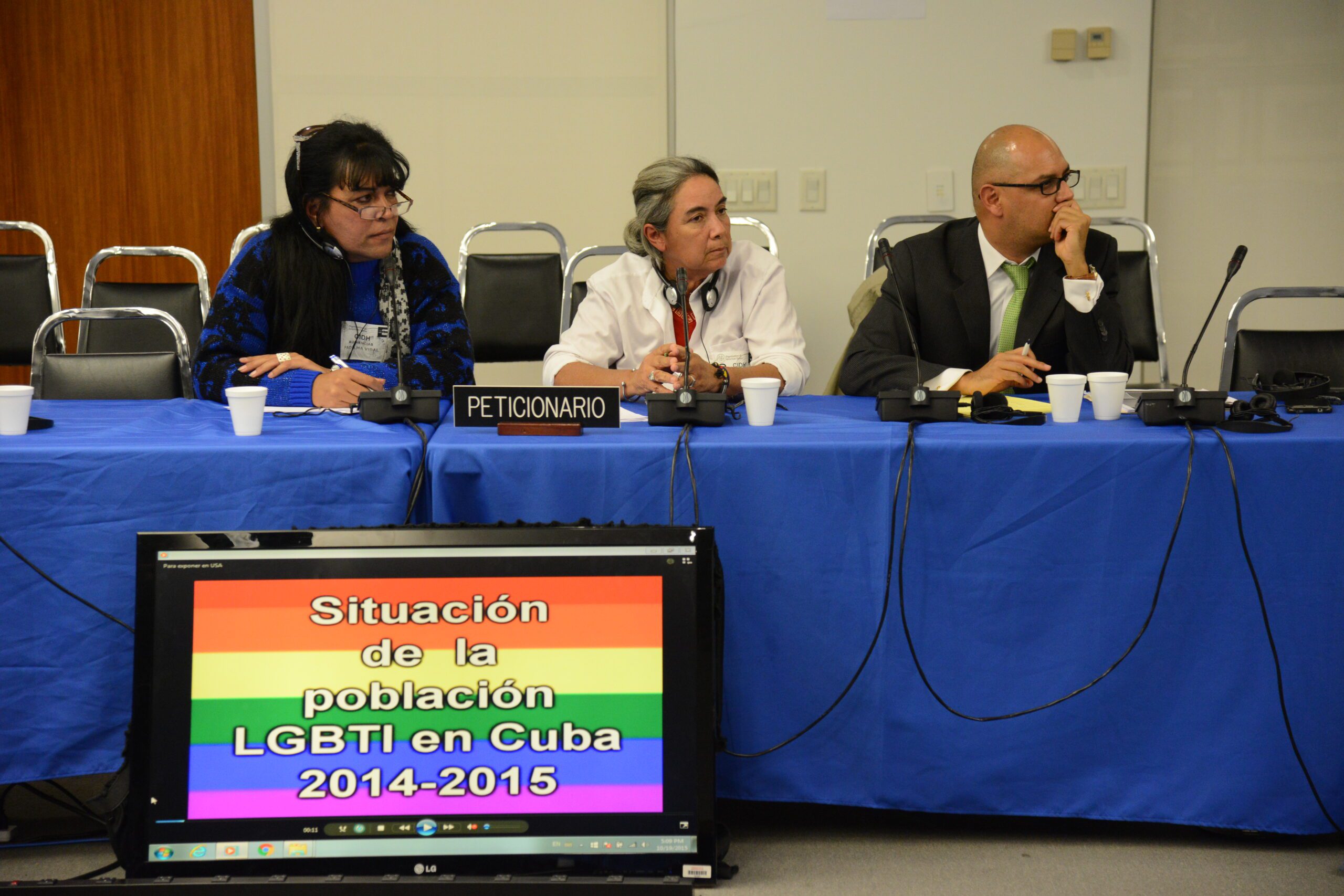
Photo courtesy of OAS photographer Daniel Cima, licensed under CC BY 2.0.
Washington DC, Monday,
October 19, 2015
Independent Cuban LGBTI activists, in coordination with the Institute for Race, Equality and Human Rights participated in a thematic hearing before the Inter-American Commission on Human Rights in order present a report on the human rights situation of LGBTI people in Cuba.
Juana Mora Cedeño of Arco Iris Libre de Cuba (Free Rainbow of Cuba) and Sisi Montiel of the Red Trans Fantasía (Fantasy Trans Network) appeared on behalf of independent Cuban LGBTI civil society, and Carlos Quesada, Executive Director of the Institute on Race, Equality and Human, joined the activists to present on the situation of discrimination and unequal protection of rights experienced by LGBTI people in Cuba.
No representative of the Cuban Government appeared.
Carlos Quesada expressed his concern to the Commission regarding the situation of human rights defenders in Cuba, where they are seen as “a threat by the Cuban government.” Quesada noted the Cuban government’s efforts at heightening the visibility of the Cuban LGBTI community, but stated that this increase in visibility “contrasts with the human rights situation of LGBTI persons in Cuba.” Quesada emphasized that the lack of data on human rights in general, and the rights of LGBTI persons specifically, remained a major obstacle for activists in Cuba.
Juana Mora Cedeño of Arco Iris de Cuba summed up the goals of the independent LGBTI civil society’s participation in the hearing. “What we aim to do is to present a critical response to the reality confronted by sexual minorities on the island, and to offer different viewpoint in order to urge the state’s institutions and the international community to better protect the human rights of LGBTI people in Cuba.”
Mora Cedeño presented to the Commission findings from the report researched and written by independent Cuban LGBTI activists. 150 Cuban LGBTI persons were interviewed, and the report detailed high incidences of police brutality, arbitrary detentions, intra-familial violence and discrimination compounded by gender identity or race and ethnicity. According to the findings, 87 of the 150 persons surveyed claimed to have been a victim of police brutality, while 67 of those surveyed were victims of violence in the home, and 45 had suffered discrimination in the workplace.
Sisi Montiel of the Red Trans Fantasía presented on obstacles faced by transgender people in Cuba, including high rates of suicide, lack of employment opportunity, as well as discrimination in education and the health sector. Montiel noted that in the latest labor code there was a lack of explicit language barring discrimination based on gender identity, meaning that “transgender people are excluded.”
Some of the recommendations of the petitioners to the Commission included the following:
To urge the Cuban government to rejoin the Organization of American States and the Inter-American System for Human Rights.
To request that the Cuban government disseminate throughout the island all documents pertaining to the international and regional systems for protecting human rights.
To request that the Cuban government cease the repression of the leaders of independent human rights organizations in general, and LGBTI organizations specifically.
Urge that the Cuban government instruct police forces to cease the repression against the LGBTI population.
At the conclusion of the petitioners’ presentations the Commissioners present made several observations. Commissioner Tracy Robinson, Rapporteur for the rights of LGBTI people reiterated the Commission’s “strong position about the need for freedom of association and freedom of speech of all human rights defenders.” The Commissioners also expressed their concern about retributions against the petitioners for their participation in the hearings. Commissioner James Cavallaro reiterated “the absolute prohibition of reprisals or intimidation against human rights defenders.”
To access video of the thematic hearing, use this link to visit the website of the Inter-American Commission on Human Rights:
http://www.oas.org/es/cidh/multimedia/sesiones/156/default.asp