Cuban Activist Aymara Nieto: One Year After Beginning a New Life in the Dominican Republic
Following her release from prison and forced exile, the human rights defender discusses her current situation, the impact of exile on her family, and ongoing efforts to address human rights violations in Cuba.
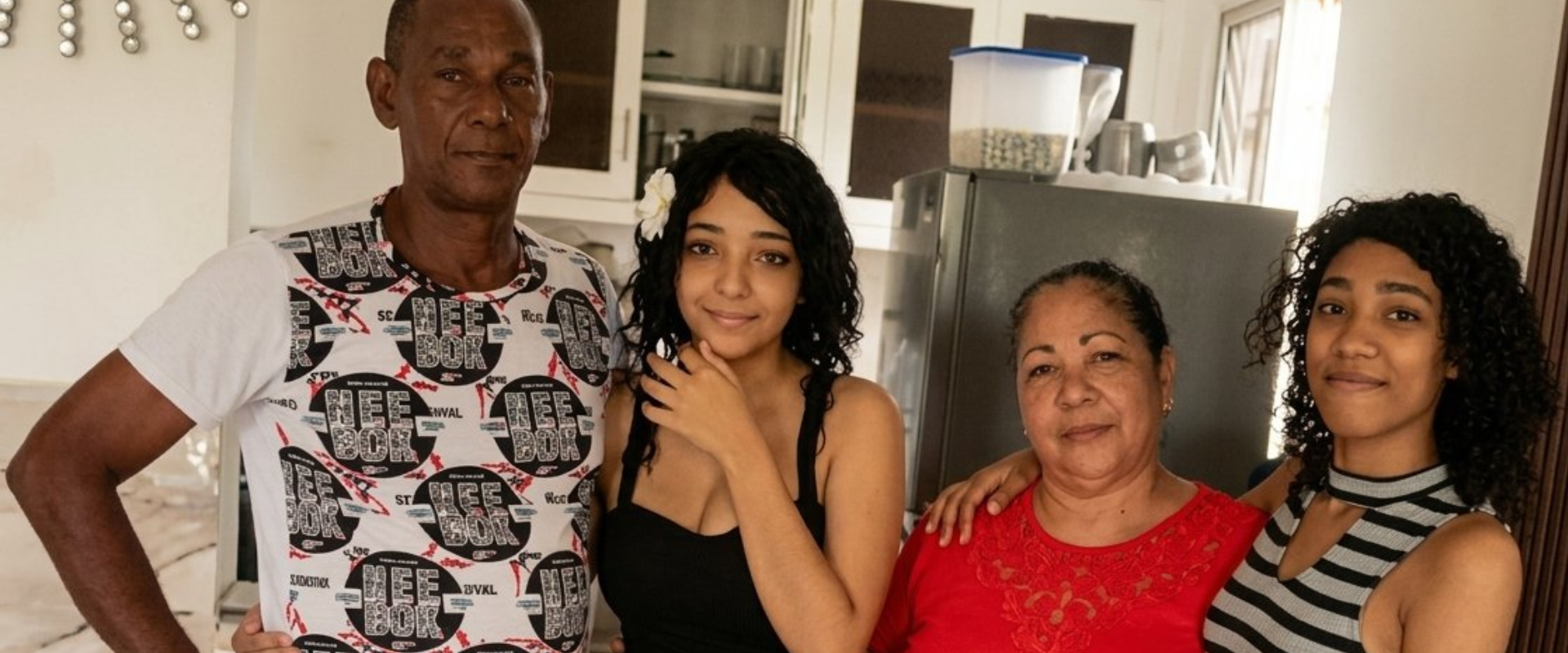
The year since Aymara Nieto landed in Santo Domingo, Dominican Republic, after leaving Havana has been a time of regained freedom, but also of distance and many uncertainties. Much has happened around the world since then: geopolitics have been reshaped, changes have unfolded, and the life of the former prominent member of the Ladies in White, a peaceful opposition movement founded in 2003 by relatives of imprisoned dissidents, has also changed. Today, after an intense period of adapting to her new reality and what she describes as a profound spiritual awakening through faith, she speaks with us in this interview.
In August 2025, after more than six years of political imprisonment and harassment, you were forced into exile in the Dominican Republic. What has the process of rebuilding your life away from your homeland been like, and what have been the greatest challenges of adapting during this period?
“It has been a very difficult experience for me and my family, because I was forced to leave my country for defending human rights and the freedom of political prisoners in my homeland.
“When I arrived in the Dominican Republic, I was welcomed by fellow activists from the Cuban American Foundation. I have a very special relationship with the people who received me. From the moment they met me at the airport, they offered us their home without expecting anything in return. They supported me, and they are still my adoptive parents here. We maintain that bond every day, and I am their daughter. We celebrate my daughter’s birthday and our anniversaries together. It has truly been a blessing in my life to find people with such strong values who, after learning about the terrible things our family has endured, have offered us the support of those who are close to us.
“Although I still do not have legal documentation here and have been unable to take formal employment, I clean houses to make ends meet. We have to stretch a very limited income because I am still not legally permitted to work. I survive because I have strength and because I have found something greater: we have found God.
“We are Pentecostal Christians. My youngest daughter is now receiving religious instruction and will be baptized soon. I have already been baptized. Going to church, being in communion with the Lord, putting Him first in our lives, and getting to know Him have all been very positive experiences. Our wounds have begun to heal, and we have learned to forgive all the harm that was done to us.”
During your imprisonment, you endured punitive transfers hundreds of kilometers away from your family, punishment cells, and a lack of medical care. What is your current health status, and how is your physical and psychological recovery from those experiences progressing?
“I suffered greatly: retaliation, transfers, and punishment. I was held at the prison in Havana known as El Guatao, or the Western Women’s Prison, and was transferred to the provincial prison in Las Tunas, the Prisión Provincial Típico Nuevo, more than 700 kilometers away from my family.
“There, I was placed in solitary confinement cells despite having committed no crime. It was simply because my husband was making denunciations in the media that I was kept in punishment cells, denied access to the telephone, and subjected to verbal and physical humiliation. Medical care in prison was also inadequate: medications and basic healthcare were lacking.
“Because of my determination, my perseverance in the struggle, international support, and my membership in opposition organizations, the repression against me intensified to the highest level.
“It was very difficult. I spent two years with virtually no contact with anyone. Because we were going through the COVID-19 pandemic and lockdown, my family could not travel to Las Tunas, as transportation had been suspended. I spent two years and eight months there and received only one visit. It was hard. Knowing that there was a deadly epidemic, that many people were dying while I was confined to a cell, made the anguish even worse.
“I cried out to God for my loved ones, asking Him to protect them and to let all the world’s suffering fall upon me instead, so that they would be spared the disease and all the terrible things happening at that time. It was an extremely difficult experience for me and for us as a family.
“Today, faith has completely transformed my life and the lives of those around me. Thanks to that, I can say that I have recovered from the health problems I suffered in prison. For example, I had high blood pressure, but since I placed my life in the Lord’s hands, I have not experienced any further episodes or lasting effects. I forgave everything that was done to me so that God could take control of the abuses committed against me, political prisoners, and the Cuban people.
“My family has also found a spiritual path, which has allowed us to rebuild our lives. Although we are still separated, my eldest daughter lives in Cuba with my mother and my four granddaughters. Our faith has restored our lives. I would like to be a source of inspiration for political prisoners and their families. I urge them to seek God and put Him first as they face the obstacles imposed by the dictatorship.”
It is well known how painful it was for you to be separated from your three daughters, two of whom were minors when you were arrested, and how crucial your mother’s support was. How is your family doing, and how have you coped with the emotional consequences of imprisonment, prolonged separation, and exile?
“I did not want to leave Cuba. I said it in every interview: they would have to kill me on my own soil.
“However, when they gave me the ultimatum that I either had to leave the country or remain in prison, I had to think about my daughters, who were already teenagers. When I was arrested, the youngest were only five and nine years old. That made me stop and reflect. If it were not for my girls, I would still be in prison. I finally accepted because of them.
“When I arrived in exile, I had to get to know my daughters all over again. I knew nothing about their new interests or personalities, and they barely remembered what it was like to live with me or to have me care for them as their mother. We had to rebuild our family relationship from scratch.
“At first, I went through a crisis. When you go through all these things, the armor you wear to keep anyone from seeing you falter eventually breaks. I went through a very deep depression that lasted about two months. I had no motivation to shower, comb my hair, eat, or do anything. Prayer helped me get back on my feet because it was a truly terrible experience.
“But I am doing well now. I feel as though, and you may not believe it, brother, I never went through any of that. That is how I feel because God has taken away all the anguish, sadness, and tension I had to endure. When you are a political prisoner under a dictatorship, you also have to deal with common prisoners, guards, and State Security. You must remain constantly alert because they could even kill you.
“Today, we live in harmony and with a great deal of love. There are no arguments in my home; we talk everything through in the peace and joy of the Spirit. We have left the pain behind.
“My mother, however, is still suffering. She has not gone through this process of faith and continues to carry the burden of the seven years I spent in prison and the distance between us today. Another year has passed with us apart, and we can only communicate through video calls when the internet allows it. The constant power outages in Cuba make communication impossible.
“I also want to share that my eldest daughter is pregnant and is about to give birth. She is currently admitted to the National Hospital, and I… this will be the fourth grandchild I will not be able to help her with or be there for.”
Arbitrary detentions and the ongoing persecution of your husband, Ismael Boris Reñí, have been documented. What is his current situation, and what about your fellow activists who remain in Cuba?
“My husband, Ismael Boris Reñí, endured constant persecution on the island. Fortunately, he is now here with me in the Dominican Republic, where we can live without the regime’s daily harassment.
“But the same cannot be said for many of our fellow activists. People like Roberto Ferrer have been released from prison but remain on ‘conditional release,’ which is equivalent to being confined to their own homes under State Security surveillance.
“Other cases are even more serious, such as that of Yunaykis Linares, a political prisoner arrested in connection with the July 11 protests, whose conditional release, granted following the Vatican’s mediation, was revoked. She was sent back to prison to serve the remaining three years of her sentence. Many other July 11 protesters remain imprisoned. The repression never stops.”
Since 2013, you have been covered by precautionary measures issued by the Inter-American Commission on Human Rights (IACHR) and have received support from Race and Equality. How effective were these mechanisms?
“I received essential support from many organizations. I have been part of the Ladies in White, UNPACU (Patriotic Union of Cuba), Cuba Decide, and the Forum for Rights and Freedoms. During my imprisonment, I received constant support from leaders such as Berta Soler, Claudio Fuentes, Rosa María Payá, and José Daniel Ferrer, as well as from international networks in Europe and the United States.
“The support provided by the IACHR and Race and Equality was decisive. The pressure exerted through the precautionary measures and the reports issued by these institutions was instrumental in making the regime choose to send me into exile rather than keep me in prison, given the visibility my case had gained.”
Your release from prison did not mean full freedom but rather a new sentence: forced exile. How do you assess the systematic use of expulsion from the country to dismantle opposition leadership?
“Forced exile remains the regime’s main tool for neutralizing opposition leadership. In my case, after serving a previous one-year sentence, I returned to the streets with the same commitment to activism. That is why, on this latest occasion, State Security officers explicitly told me that the streets of Cuba were off-limits to me and that the only way out of prison was to leave the country. Yes, it is a systematic mechanism for emptying the country of its domestic opposition.”
You have consistently reaffirmed your commitment to demanding the release of political prisoners. How do you maintain ties with human rights movements from abroad?
“I remain fully active in exile. I continue to work closely with the Ladies in White, UNPACU, and Cuba Decide. I actively participate in demonstrations and activities organized by the Cuban-Dominican Association and other exile groups to raise awareness of the Cuban cause. I constantly call for unity among all our fellow Cubans in exile so that we can demand the release of political prisoners and develop mechanisms to pressure the regime. I sign every petition I receive calling for change in Cuba and freedom for political prisoners. My signature will always be there.
“I feel the suffering of political prisoners deeply. If conditions in prisons were dire when I was incarcerated, they are even worse today because of the collapse of the national electricity system. The lack of power prevents the preservation of what little food is available and disrupts the pumping of drinking water, for example. Families often cannot visit because they have no food to bring or no transportation to make the journey. The crisis in prisons and in Cuban society as a whole is absolute.”
As you mentioned, Cuba’s current socioeconomic crisis and ongoing repression have further aggravated the situation. How do you assess the human rights situation in prisons and Cuban society at large?
“The situation in Cuba is unsustainable. Shortages of water, food, and electricity have reached extreme levels. This collapse has also led to an increase in social violence, theft, and desperation among the population.
“The deterioration of prisons mirrors the deterioration of the country. Most Cubans are surviving in frankly deplorable conditions, while a minority with access to remittances from abroad, some small businesses, or companies linked to the government leadership maintain a standard of living far removed from that of everyone else. The economic collapse is also triggering severe social consequences, including increases in homicides, femicides, and suicides. Without a drastic political change, the situation can only continue to worsen.”
Finally, what message would you send to the women human rights defenders who remain imprisoned, and what appeal would you make to the international community?
“From my own experience, I can tell them that even in the darkest moment, there is hope. I urge political prisoners and their families to maintain their faith and never stop speaking out, protesting, and demanding their release. The international community, the United Nations, and exile movements must also intensify pressure on the regime until all prisoners of conscience are free.
“To those who have supported us and to the organizations defending our cause, I once again express my sincere gratitude.
“Cubans on and off the island must remain united. You are not alone. From exile, we will continue to raise our voices for freedom. I continue to pray that God will bring change to my country, so that those of us who have suffered forced exile can return to Cuba, our home.
So be it. Thank you, Aymara.