Afro-Colombian Day Is Not Just A Commemoration; It Is A Call For The Recognition Of Rights
Our legal consultant in Colombia, Dayana Alomía, reflects on the significance of this date for Black, Afro-Colombian, Raizal, and Palenquero people who, like her, have faced inequality and resistance in this country.
Bogotá, May 21, 2026 – There is a way of being in the world that cannot be learned in a classroom or decreed by an institution. It is learned by living in community, by caring for one another.
In Colombia, Black, Afro-Colombian, Raizal, and Palenquero communities have always lived this way; not because they had no other choice, but because they understood something that has taken others centuries to grasp: that life alone is not enough, that the land is cared for by all, and that dignity is not an individual achievement, but a collective endeavor.
Today, May 21, Black, Afro-Colombian, Raizal, and Palenquero communities commemorate Afro-Colombian identity from this very place: from the organizational processes that have been shaping the agenda for decades; from the community councils that govern the territory with their wisdom; from the women’s organizations that have sustained daily life at times when everything else was falling apart. From the youth who received an enormous legacy and are carrying it forward with commitment and pride.
That legacy goes back a long way. And to understand what we are commemorating today, we must understand what they have resisted in order to get this far. Because the struggle of Black people in this country did not begin in 1851, when slavery was abolished. It began when the first Africans were brought to these lands, torn from their families, their languages, their names, and their identity. And from that moment on, the struggle was to reclaim the humanity that had been taken from them.
The palenques were the most visible expression of that resolve; entire communities that said no, that built their own territory. San Basilio de Palenque, a town in the Colombian Caribbean, survived. It defended its autonomy, preserved its language, and maintained its memory. And today it still stands.
Freedom arrived in 1851 without land, without resources, without the actual conditions to exercise it. And the communities had to keep fighting. For their territory. For education. For the right to participate, to decide, to be recognized.
That struggle found its way into the 1991 Constitution. Black community organizations didn’t wait to be given a space; they built it themselves. They arrived with their own agenda and succeeded in having ethnic and cultural diversity recognized. They secured Law 70 of 1993, which recognized collective territories and the right to prior consultation. That was no gift. It was the result of decades of organizing, of people who dedicated their lives to making possible what seemed impossible.
And yet, the gap between what the law says and what reality shows remains enormous. Between May 4 and 14 of this year, for example, the United Nations Mechanism of Independent Experts to Promote Justice and Racial Equality in Law Enforcement (EMLER) heard from communities, organizations, and state institutions. And upon concluding, it stated what communities have been saying for decades: that racism in Colombia is not a collection of isolated incidents, but a structural, historical, and sustained system. One that manifests itself in health indicators, in maps of violence, in unprotected territories, and in bodies that do not generate the same sense of urgency when they disappear.
Over the centuries, Black, Afro-Colombian, Raizal, and Palenquero communities have demonstrated that identity is neither decreed nor granted. It is built, defended, and passed down. And that is precisely what this country holds in its hands: a living, organizational, cultural, and political heritage that continues to grow, that continues to shape leaders, that continues to care for territories, and that remains, after all that has been thrown in its path, a transformative force.
That is why this day is not just a commemoration; it is also a call for this country to honor with deeds what it has recognized with words, and for the rights that took centuries of struggle to achieve to be exercised without anyone having to pay with their life to defend them.
At the Institute on Race, Equality, and Human Rights, we echo Alomía’s words and join in commemorating this date to remind everyone that racism affects millions of Afro-Colombians; at the same time, we demand that the Colombian government provide guarantees for the recognition of the rights of the Black, Afro-Colombian, Raizal, and Palenquero communities in this country.
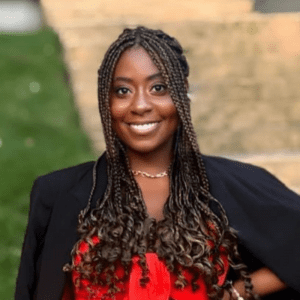
Dayana Alomía, Legal Consultant on Race and Equality in Colombia