“I’m in that kind of limbo that prison was”: Luis Manuel Otero Alcántara, Cuban artist in exile
After serving an unjust five-year prison sentence in the province of Artemisa, the Cuban artist has spent the past two months walking the streets of Miami while denouncing human rights violations in Cuba.
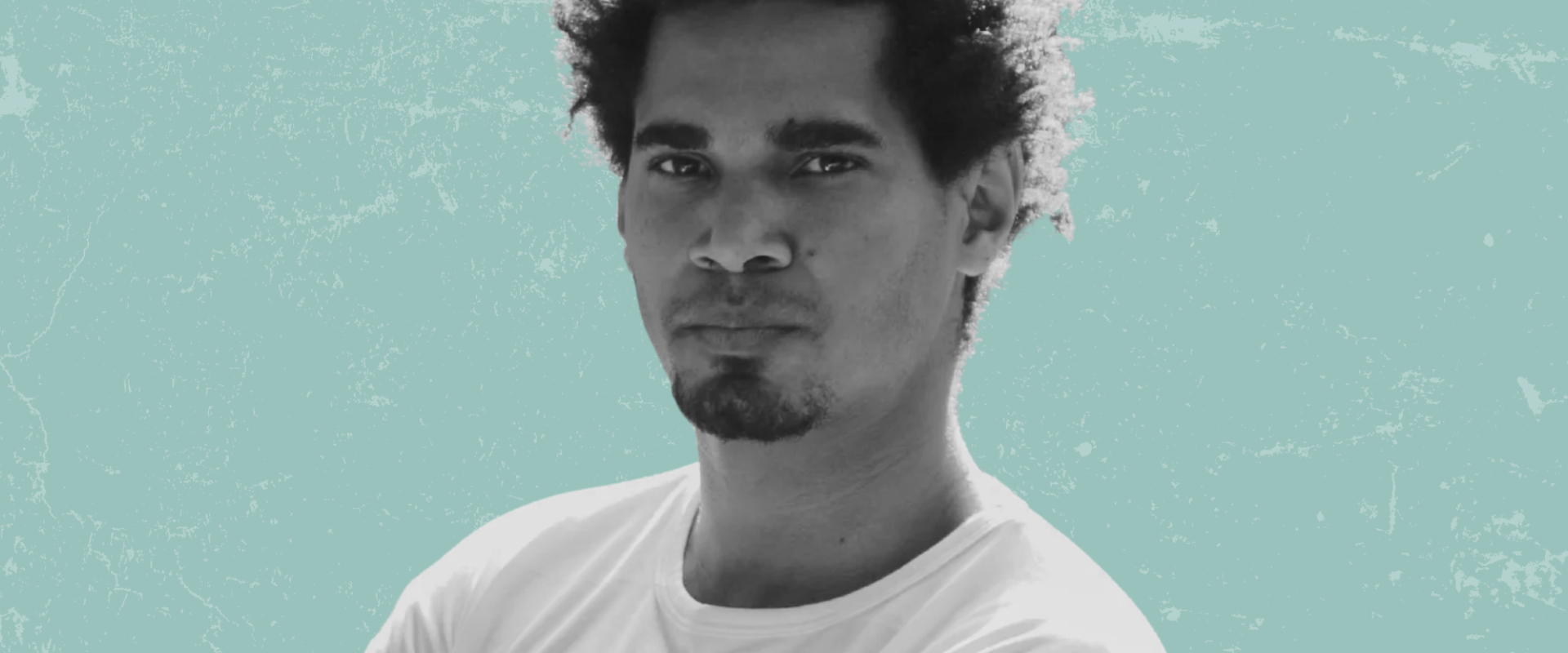
Miami, October 7, 2026 – Luis Manuel Otero Alcántara, the Cuban artist who has been living in Miami, United States, since July 18, answers the questions in this interview clearly and forcefully. In the room where he arrived after serving five years in Guanajay maximum-security prison in western Cuba, and after becoming a beneficiary of the U.S. government’s humanitarian parole program, he speaks about the island, his family, the San Isidro Movement (MSI), migration, art, and the works through which he has denounced the dictatorship that has controlled Cuba for years.
Below is the interview conducted by the Institute on Race, Equality and Human Rights with the Cuban artist, edited for clarity.
Now that you are free, what do you think about most often?
I always think about Cuba, I always think about art, about how art will continue to function as a living tool that contributes to society, both Cuban society and society outside Cuba. I think about Cuba, about those who were left behind, about those people who right now cannot drink potable water because there are no conditions for it; there is no electricity, there is no life in Cuba. I think about that.
Do you think about it from a place of anxiety, or from a place of reflection that leads you to ask yourself, “What more can you do?”
I think it’s a bit of both. I think there is some anxiety because the place where I am right now is an unknown place, a place that presents enormous challenges. You are currently without a home. You have to pay rent, you have to have a place to exist. Then you have done a lot of work that precedes you, but undoubtedly the world that comes now is much bigger; you have to conquer a new space within the popular imagination outside Cuba. You also want your work, your art, to have those spaces, those niches of recognition in the West, of global recognition, because from there you can also continue working for Cuba. And then, what is left to do for Cuba? What are the new ideas that have to come into your mind so you can go out and work for Cuba? I suffer that reality every day, even from a distance, even from exile.
How long did it take you to make the decision to go into exile?
The decision to go into exile went through several stages. After a year and six months in prison, I decided to leave because I realized the impact we had made, how enormous it had become, and that the Cuban dictatorship was not going to allow Luis Manuel Otero Alcántara to walk freely in the streets. Then I kept spending time there, and I kept accepting it, and there came a moment when my departure was getting closer. I had the possibility of deciding: I’m not leaving Cuba, even though I had already served the five years. But then I reaffirmed my decision, especially when they took me to the house near the beach, the State Security house. When they took me to that house, I realized there was no possibility of walking the streets. In fact, the way State Security treated me at that point was basically: you are leaving because you are leaving. We are going to give up everything we can, but it is so that you leave; it is not so that you live in Cuba, because you are not going to walk around Cuba.
When you see that entire apparatus built around making sure you leave, it is because you are important. There was even a moment when they took me out, and it was as if I were the head, and they couldn’t mention my name. My name was like something forbidden to say. I thought, “Well, it seems that you do have an impact on society and, of course, the dictatorship is not going to allow its own death,” you know? That’s when I realized that it was going to be impossible to continue working from within Cuba. I could have come up with a radical plan to stay at home, but I would have stayed at home without internet, without the tools to continue contributing. That’s when I decided to go into exile.
What does it feel like to walk down the street without being watched?
I’m still traumatized by the surveillance. When I enter this space, when I’m coming in from the street and a car passes by, I feel as if that car is coming for me. The other day I was standing outside, there was a police car on the corner, and immediately my body went back to that place in Havana. I still feel watched. I feel that wherever I go, there is an eye belonging to State Security and the Cuban regime watching me.
Of all the works and performances you have created, which has been the most symbolic and powerful in portraying the Cuban regime?
I think my work as a whole is a living testimony of that relationship: the dictatorship trying to strip away the art that makes it uncomfortable, trying to strip away art that is committed to people. In my work, I have always been committed to making it reach people, to making the individual who walks the streets, the individual who stands in lines, the individual who suffers under the dictatorship in the most basic ways, think. And I don’t think there is one specific work, but rather the whole of it, my own performative body, my own cultural body, activist body, artistic body. That is the great work.
What has been the most rewarding thing about creating the San Isidro Movement?
I think the most rewarding thing about having generated or been part of the San Isidro Movement is, first of all, having demonstrated that art was a real tool for change. Not merely a political comment, not merely an artist’s expression, but demonstrating that a powerful tool such as art can be used to change things firsthand, not through third parties or fourth parties.
I think that was the most important thing for me. And, of course, seeing on the ground how a society changes from a state of terror, a state of fear, to becoming a civic society, to becoming a society capable of taking control of its immediate and long-term future. And it began with a cultural project, an artistic project, as the MSI was called.
For me, Cuba’s history is in San Isidro, just as it is in many other projects, such as the Varela Project and other movements such as the Ladies in White and UNPACU. I think San Isidro also forms part of that recent history and of the collective memory of those Cubans who sacrificed themselves so that Cuba could become a better place. And I would love for it to be recorded that way in history.
Now that you are in exile, how do you see Cuba? How has your perspective changed?
It’s difficult for me to answer that question because I don’t think I have landed yet. I’m in that kind of limbo that was prison, that kind of limbo that came afterward while I was in that house, that kind of limbo that comes from getting on a plane like that and landing somewhere with an enormous amount of information that your brain is processing.
What was the most difficult thing about being in prison?
Brother, the hardest thing about being in prison is prison itself. Prison is a horrible place. Prison is something that, if I could describe it to you in words, cannot be described with words. In fact, I brought a series of works. My paintings will help people understand. For example, there is a series I made that was like black holes, where you feel as if you are in a kind of limbo, like those nightmares where you fall into a void and never reach the bottom, and you are always in that state of anxiety.
I remember the last time I was at an amusement park, when they put me on one of those rides that is like a ship, and I was at the very end, and it went up, and then that sensation of going down, when you feel like you’re going to die. That adrenaline, which is toxic, is what you feel in prison every day. You feel as if you are in a void and never reach the end. Even after you leave, that void continues to remain inside you for a long time. Literally, what you feel in prison is that you are suffocating. That feeling of being unable to breathe, of not getting enough air.
If you could explain what is happening in Cuba to people who are not from the island, what would you tell them? Why can’t what is happening there be “romanticized”?
First of all, it cannot be romanticized. It cannot. It is impossible to romanticize it; it is even impossible to trivialize what people in Cuba are going through. It is impossible to have affection for a dictatorship. When someone comes to talk to me about Cuba, when they talk to me about utopia or about the blockade, the embargo, the Americans, I tell them that what exists in Cuba is a dictatorship.
There are more than a thousand political prisoners in Cuba. And the political prisoners there right now are not even activists or opposition members. They are children, young people, women who took to the streets demanding a new political system, a new economic system.
So, if someone romanticizes that, they are complicit with the dictatorship. They are complicit with the bad people who are running that country right now. We are talking about a time when, maybe 50 or 40 years ago, there was no internet, no one could see what was happening in Cuba, and you had to rely on the regime’s propaganda. But right now, July 11 is there, there are more than a thousand political prisoners, there are more than I don’t know how many thousands of reports. If you live in a bubble and maintain that romanticism, you are a bad person. You are a bad person because you are complicit with a dictatorship, and I want nothing to do with dictators, much less will I tolerate their accomplices justifying it through romanticism. They are not romantics; they are murderers.
***
From the Institute on Race, Equality and Human Rights, we echo the denunciations made by Luis Manuel Otero Alcántara. We also condemn the forced exile suffered by this Cuban artist and by other activists, independent journalists, and human rights defenders. We urge the authoritarian regime in Cuba to end repression, release all people deprived of their liberty for political reasons, and begin a democratic transition that protects the fundamental rights of Cuban people, both on and off the island.