Lucía Pineda, Nicaraguan journalist apprehended for her reporting, receives precautionary measures from the IACHR
Washington, DC, February 22, 2019 – Nicaraguan journalist Lucía Pineda Ubau, Head of the Editorial Office of Canal 100% Noticias [100% News Channel], this Friday received precautionary measures from the […]
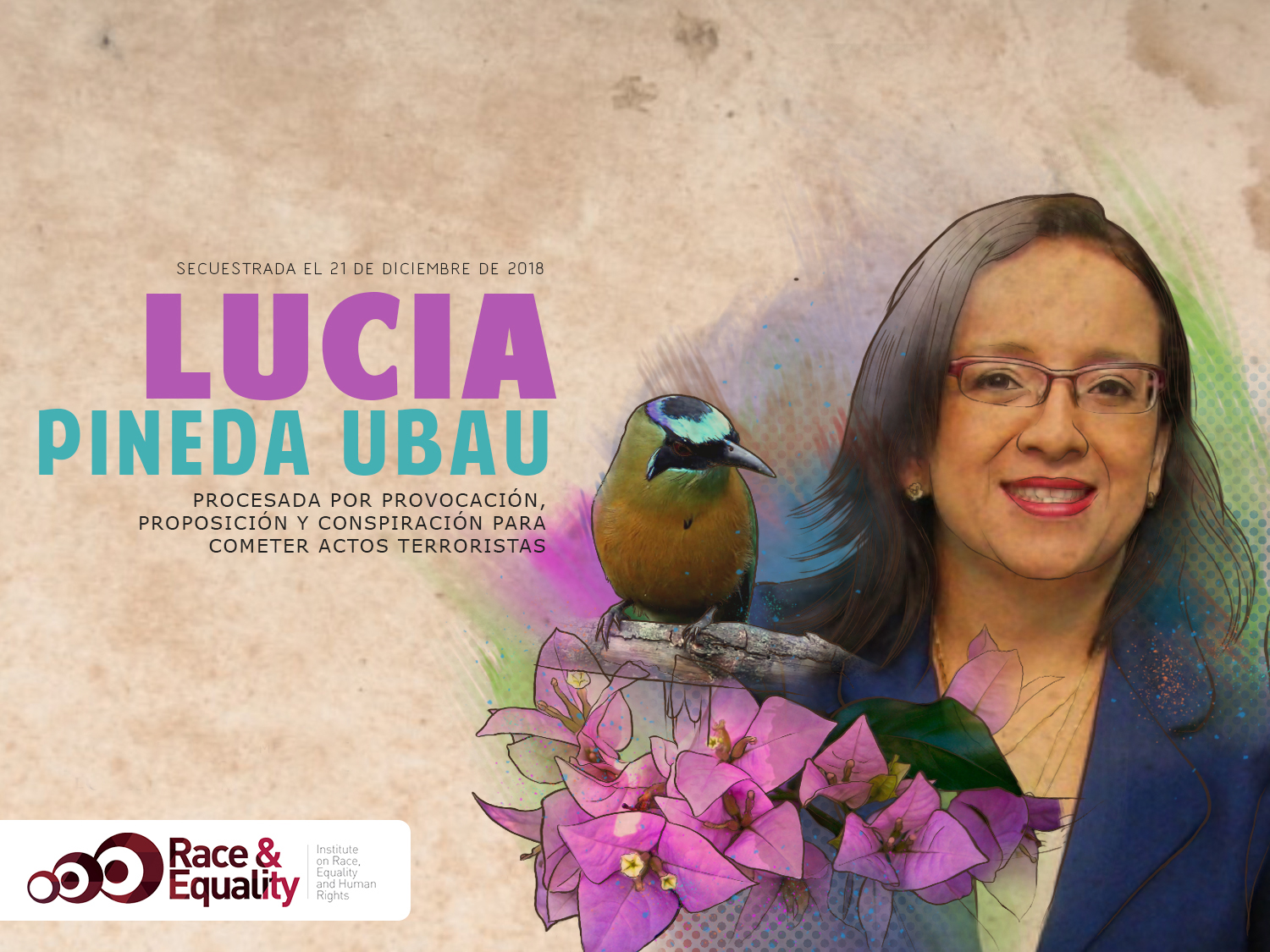
Washington, DC, February 22, 2019 – Nicaraguan journalist Lucía Pineda Ubau, Head of the Editorial Office of Canal 100% Noticias [100% News Channel], this Friday received precautionary measures from the Inter-American Commission on Human Rights (IACHR), in light of that body’s belief that her rights to life and physical integrity are “in a state of grave risk.”
Pineda Ubau, 45 years old, is currently detained in the La Esperanza [The Hope] Women’s Penitentiary System and faces a trial for the crimes of provocation, proposition, and conspiracy to commit terrorist acts in which due process guarantees have not been respected.
According to the information received by the IACHR, the initial persecution of the journalist and her subsequent detention and trial “would be presumed retaliation for the exercise of her journalistic activities and right to freedom of expression.”
The journalist denounced through 100% Noticias “the repression by the National Police to disband the protests, as well as multiple detentions, denunciations of torture, disappearances, and allegedly arbitrary trials that were initiated against protesters,” highlights the IACHR.
Through its Resolution No. 873-18, the IACHR asks the State of Nicaragua to adopt the necessary measures to guarantee the rights to life and physical integrity of Pineda and her nuclear family, whose identity the IACHR reserves.
2⃣ Las presas políticas de #Nicaragua tuvieron distintos grados de participación en las protestas contra las autoridades, las cuales exigían justicia para las víctimas de la represión y democracia para los nicaragüenses. Por eso tenían diferentes ocupaciones y variados contextos: pic.twitter.com/P21mxpqSGM
— Race and Equality (@raceandequality) 12 de febrero de 2019
4⃣A las presas políticas de #Nicaragua también les han violado su derecho a la integridad personal y al trato digno, según han reportado ellas mismas a sus familiares. #CIDHAudiencias #LibertadParaLasPresasPoliticas pic.twitter.com/lRJrzr2Fag
— Race and Equality (@raceandequality) 13 de febrero de 2019
Specifically, it asks the State to ensure that prison agents respect the journalist’s rights “pursuant to standards established by international human rights law,” given that it is known that Pineda has been submitted to at least 30 interrogations lasting several hours with the goal of recording a video of her asking President Daniel Ortega for forgiveness.
They are also asking the State to ensure that the conditions in which Lucía Pineda Ubau are detained adhere to international standards.
Since being detained, Pineda has reported to her defense attorney that she sleeps on the floor, receives no food, and has nothing with which to clean herself, which has resulted in a skin illness. In addition, the lack of a toilet in her cell forces her to go to the bathroom in a manner that offends her human dignity.
The IACHR asked the State to provide the appropriate medical attention to Lucía Pineda and to facilitate her access to her legal representatives and visits from her family, given these have been limited to date.
Lucía Pineda is one of at least 60 female political prisoners being held by the government of Nicaragua. It is estimated that 765 people have been incarcerated for demanding justice and democracy from Nicaraguan authorities.
Antecedentes
Since governmental repression began against protesting citizens in April 2018, Canal 100% Noticias has denounced the ongoing violence in the country. Lucía Pineda, as the Director of Communications for the media outlet, gained visibility for her journalistic work on the program 100% Entrevistas [100% Interviews], which in turn exposed her to threats, attacks, and even a campaign against her aimed at stigmatizing her.
On December 21 of last year, several weapons-wielding police patrols broke into the offices of the TV outlet 100% Noticias at night. In the operation, they dismantled and removed journalistic equipment and illegally detained the channel’s director, Miguel Mora, his wife, journalist Verónica Chávez, and Pineda. All of them were transferred to the Dirección de Auxilio Judicial [Directorate of Judicial Aid] (DAJ) and it was not until 72 hours later that the authorities informed their relatives as to their whereabouts. During that time, Chávez was released.
Mora and his relatives had received precautionary measures from the IACHR just eight days before his detention, as did journalist Leticia Gaitán. The latter had to flee the country to guarantee her personal freedom.
#SOSNicaragua - Exigimos al Estado de Nicaragua el respeto y garantía de los derechos de los periodistas en el país que hoy son representados en las arbitrariedades cometidas contra #MiguelMora y #LuciaPineda de @100noticiasni - ¡JUSTICIA Y DEMOCRACIA! - https://t.co/McevCw38c7 pic.twitter.com/KySViMalPa
— Race and Equality (@raceandequality) January 8, 2019
On the same day as Mora and Pineda were detained, the Instituto Nicaragüense de Telecomunicaciones y Correos [Nicaraguan Institute of Telecommunications and Mail] (TELCOR) suspended the TV outlet. To date, the [TV channel’s] offices remain broken into, shuttered, and guarded by police agents, while the [channel’s] frequency was awarded to another TV channel.