The Conviction for the Murder of Marielle Franco Must Translate into Structural Guarantees Against Gender-based Political Violence in Brazil
Rio de Janeiro, March 4, 2026.– The historic conviction of the brothers Chiquinho and Domingos Brazão to 76 years and 3 months in prison for the murder of city councilwoman […]
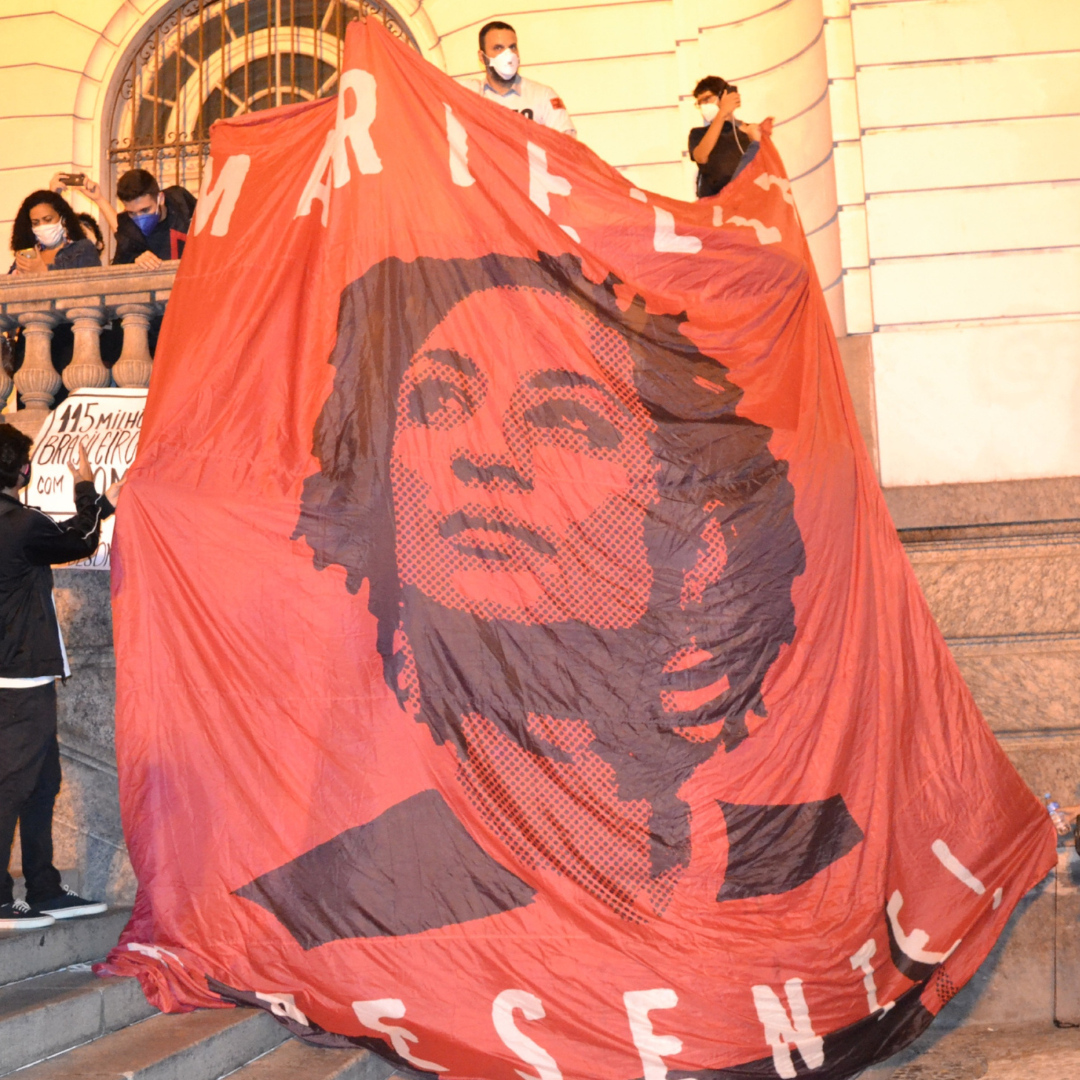
Rio de Janeiro, March 4, 2026.– The historic conviction of the brothers Chiquinho and Domingos Brazão to 76 years and 3 months in prison for the murder of city councilwoman Marielle Franco and driver Anderson Gomes represents not only the end of a long cycle of impunity, but also a milestone in the legal recognition of the seriousness of gender-based political violence in Brazil.
For the Institute on Race, Equality, and Human Rights (Race and Equality), this ruling sets an important precedent, but it also puts the Brazilian state to the test: justice in a landmark case must be accompanied by structural changes that guarantee non-repetition and the effective protection of women in public life, especially those who face multiple and intersectional forms of discrimination.
As defined by Law No. 14.192/2021, gender-based political violence is any action that aims to impede, hinder, or nullify the political rights of women simply because they are women. In the case of Marielle, a Black woman, raised in the Maré favela, and a human rights defender, this violence was taken to its ultimate consequences. As Minister Alexandre de Moraes highlighted in his vote, the crime combined ‘political issues with misogyny, racism, and discrimination,’ pointing out that the councilwoman ‘was a poor Black woman who was standing up to the interests of militiamen.’ Minister Cármen Lúcia also echoed this sentiment when reflecting on the historical weakening of women as subjects of rights: ‘Killing one of us is much easier […] Because ‘nothing will happen’.’
This vulnerability denounced by the minister reaches even more critical levels when it comes to LBTI women (lesbians, bisexuals, transvestites, transsexuals, and intersex). Official data reveals an alarming scenario: between 2015 and 2022, notifications of violence against lesbian women grew by 50%, and Brazil is among the countries with the highest rates of murder of trans people. These numbers show that, for LBTI women, political violence is aggravated by structural LBTIphobia, which places them in a position of extreme vulnerability in spaces of power and decision-making.
It was in this context that the federal government launched, in September 2025, the Standard Operating Procedure (SOP) for the humanized care of LBTI women in situations of violence. The protocol establishes fundamental guidelines so that the care network respects the gender identity and sexual orientation of the victims, avoiding re-victimization and ensuring qualified listening and access to justice.
However, it is important to emphasize that the adoption of protocols of this nature must be accompanied by sufficient budgetary allocation, mandatory training for public officials, accountability mechanisms, and independent monitoring systems that allow for the evaluation of their real impact. The enhanced due diligence required by international human rights law obliges the Brazilian State not only to investigate and punish, but also to prevent, protect, and provide comprehensive reparations.
In this regard, Race and Equality calls on United Nations mechanisms (in particular the Special Rapporteur on violence against women and girls and the Independent Expert on sexual orientation and gender identity), the Inter-American Commission on Human Rights, and diplomatic missions accredited in Brazil to actively monitor the implementation of structural measures that guarantee the safety and a life free of violence for Black women, LBTI women, and women human rights defenders.
The conviction of the Brazão brothers and their accomplices cannot be seen merely as the outcome of a criminal investigation. It must represent a turning point in the fight against gender-based political violence in Brazil. Marielle Franco’s memory demands that the Brazilian State continue to advance in the implementation of effective public policies to protect all women who dare to occupy politics (especially those who, due to their race, sexual orientation, or gender identity, are even more exposed to violence and erasure).
Marielle Lives!