“The Cuban regime is to blame for everything that is wrong in Cuba today”: José Jasán Nieves, El Toque editor-in-chief and 2026 ICFJ Knight Award winner
The journalist, who has been living in exile in the United States since 2019, reflects on the challenges facing independent journalism in Cuba, repression against freedom of the press, and the struggle for democracy on the island.
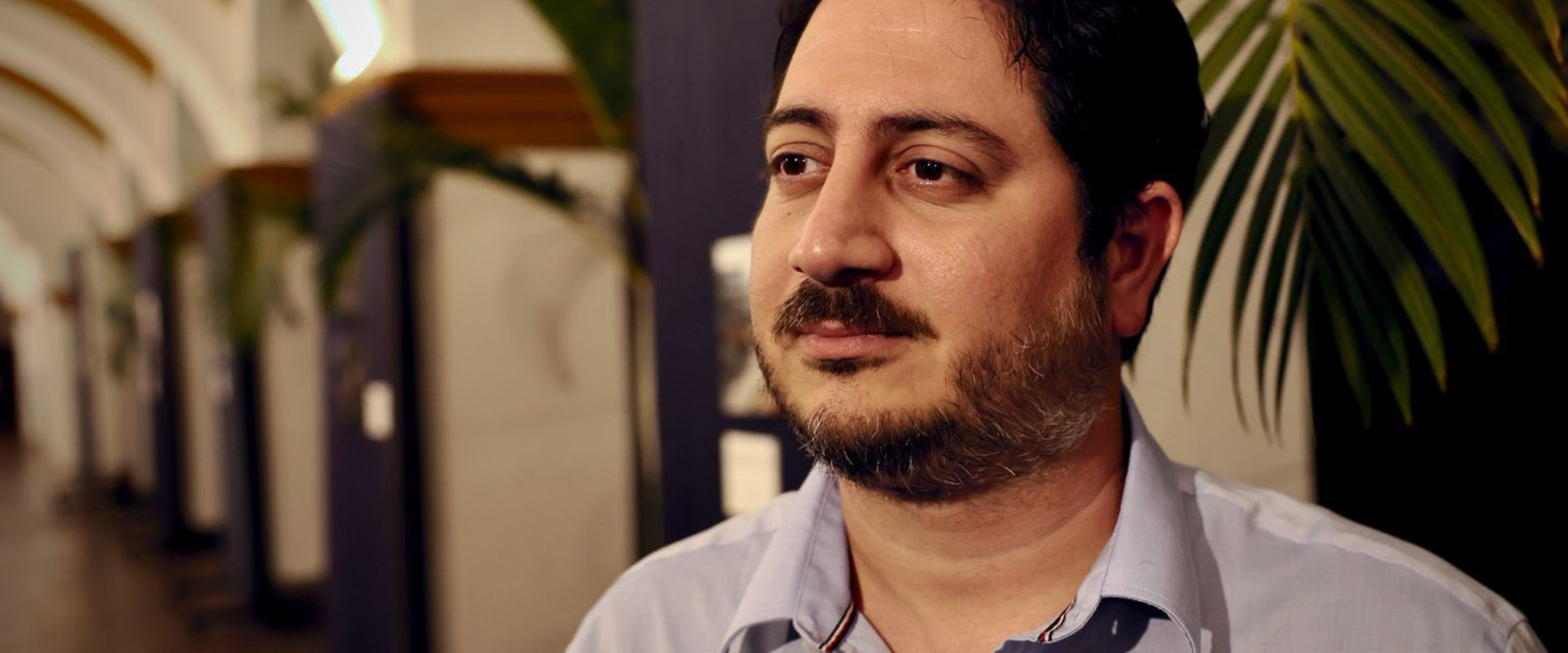
Washington, D.C., November 9, 2026. Speaking with Cuban journalist José Jasán Nieves Cárdenas, 38, originally from the city of Cienfuegos, is like attending a history class. His eloquence and ability to explain the Cuban reality offer a deeper understanding of a country marked by decades of state control, censorship, and restrictions on freedoms.
Nieves is the editor-in-chief of El Toque, an independent Cuban media outlet founded in 2014 that now has a team of 22 people. From exile, he has become a source of information for those living both inside and outside the island. His work was recognized by the International Center for Journalists (ICFJ), which awarded him the 2026 Knight International Journalism Award, one of the most prestigious honors in international journalism. He will receive the award this Tuesday, November 10, in Washington, D.C. He will be the second Cuban to receive this recognition, following journalist Yoani Sánchez, director of the media outlet 14ymedio, who received it in 2015 and was subjected to repression by Cuban authorities just a few days ago.
Sánchez and two other independent journalists, Camila Acosta and Adelth Bonne Gamboa, were detained in Havana last week. These incidents are yet another example of the pressure and harassment faced by those who seek to report on the reality of the island outside the official narrative. Nieves’s recognition comes at a time when practicing independent journalism in Cuba continues to involve serious risks.
In this interview, Nieves discusses the role of independent journalism in challenging the narratives promoted by the authoritarian Cuban regime, the obstacles El Toque faces while operating from exile, and the forms of persecution that have reached even his family and his team. He also reflects on the significance of July 11, 2021, Cuba’s future, and the reasons that keep him working despite exhaustion and difficulties.
What does receiving the 2026 ICFJ Knight International Journalism Award, one of the most prestigious recognitions in international journalism, mean to you, and what does this award represent for independent journalism in Cuba?
I wasn’t expecting this recognition from the International Center for Journalists, but it is very welcome because it is not just recognition of me personally. In its explanation of the award, the jury acknowledged the impact of some of the work we have produced and the journalistic and social value of those projects. For me, after several years of doing what we do, and considering the cost of doing it, that is the greatest recognition.
It feels good to know that colleagues from around the world, highly regarded professionals, believe that the work we have done deserves international recognition. It also helps bring visibility to the work of independent Cuban journalism and the team at El Toque. I see this award as an opportunity for the world to learn that in Cuba, this small media outlet, with limited resources but a strong desire to work toward democracy and the liberation of our country, is doing its best to make a difference.
How important is the work of independent journalists in reporting what is really happening in Cuba, beyond the narrative presented by the regime?
Let’s start by saying that part of the country’s system of control involves creating the impression of an unreal world inhabited solely by praise and official propaganda. It is, so to speak, a form of state-sponsored gaslighting.
You live your life and see with your own eyes that things are bad. But the mass media constantly convey the idea that everything is fine, that things are improving, that the future is bright, and that everything is going according to plan. The goal is to isolate citizens and make them question their own perception of reality. It’s as if you’re asking yourself: Am I the only one who thinks this way? Because everyone else, or at least the official media and mass media, describe a reality that is completely different from the one I experience. Am I the one who’s wrong?
Journalism, then, serves the purpose of bursting that bubble and puncturing it with data, undeniable facts, and reality.
The Cuban regime is primarily responsible for everything that is wrong in Cuba today. Independent journalism, through facts rather than opinions, through investigations, testimonies, and data, provides the information needed to challenge those narratives.
Why is the term “independent” used in Cuba to refer to the practice of journalism?
The term “independent” is used because we practice journalism outside the only legally recognized space for doing so in Cuba. The Cuban legal system, controlled by the Communist Party of Cuba, establishes that the only legally permitted journalism is that which operates in the interests of the Communist Party’s and the Cuban state’s propaganda.
The term “independent Cuban journalist” is used to distinguish state propaganda from media outlets that seek to provide Cuban audiences with rigorous, verified, and non-propagandistic information.
How difficult is it to practice journalism inside and outside Cuba?
It is extremely difficult in Cuba, just like any activity the State considers dissident, meaning anything that challenges state policies. It involves risks, it is prohibited, and it is directly criminalized. In other words, people go to prison for practicing independent journalism in Cuba.
There are independent journalists in prison in Cuba today, and the State almost always prefers that we end up in exile. Along the way, however, it employs every available form of pressure to achieve that goal: to demobilize us, force us to stop working as journalists in the country, or make us leave. And if it fails, it resorts to political imprisonment.
They can prohibit you from leaving the country. If you have travel plans, they won’t let you go. That is one of the most common forms of punishment. Another way they wear you down is through constant interrogations disguised as conversations. They don’t officially detain you, at least not initially. Instead, they take you to places that serve as detention centers for State Security, the Cuban political police, where they play good cop and bad cop, questioning you for hours and hours about why you do what you do. They accuse you of being an agent working for foreign powers. In short, their aim is not to convince you of anything, but to overwhelm you, exhaust you, disrupt your work, and make it impossible for you to do your job.
And then, well, that can eventually lead to arrests as repression escalates. Physical violence is not necessarily part of the initial playbook, but it is certainly included in the manual.
This is a regime that employs the full range of repressive tactics, and independent journalists, as members of civil society who oppose the existing order in Cuba, suffer the consequences. But it doesn’t end there, because once you go into exile, they don’t stop targeting you.
How long have you been in exile?
I left Cuba seven years ago, in 2019. Although I didn’t initially plan to stay, once we were abroad, my wife, my family, my children, and I realized that it was too dangerous for us to return. From that point on, I considered myself not an emigrant, but an exile.
Before that, I had been detained in Cuba, and so had my wife. When you have a family, the cost of repression naturally increases. Before, you might have been more willing to endure it because you were the only one paying the price. Now, the number of people who could be targeted because of your work and actions also increases. And so, that led me to decide to remain outside Cuba and continue working.
I should also say that, in reality, the impact of our work began to be felt more strongly once we were abroad than when we were still inside the country. I have actually faced more attacks outside Cuba than I did when I was there.
I would like you to tell us a little about the harassment and persecution you have faced because of your journalistic work, including from exile. How does transnational repression manifest itself in your case, and how are you dealing with this reality?
For example, here in the United States, in 2021, they sent an agent from Cuban intelligence to film the front of my house from a car, using a phone. Then they sent me the video and told me: “Look, we know where you live. We know how to get to you.” The purpose was to intimidate me and make me give up the work I do.
Then they exposed my home address. Imagine seeing your house, your address, published in the country’s most widely circulated newspaper and broadcast on its most-watched news program during prime time. That is clearly doxing, and the purpose is the same: to expose you so that some radicalized government supporter can access your address and know where you live, where not only you but also your family and children live, and use that information to threaten you.
Then, in Mexico, I attended an event in 2025, and as I was leaving, I encountered a group of agitators, around ten members of the Mexican Communist Party, holding a poster with my face on it and accusing me of being an agent of the empire. They shouted insults at me and were clearly trying to create a situation in which, if I reacted, they could rush toward me and beat me up. They have done this kind of thing to other Cubans at other events in Mexico. I don’t consider myself deserving of that much attention, but, on the other hand, if they do it, it is because I understand that the work we do has an impact and bothers them.
Those are the main cases of harassment. Beyond that, there have been threats of extradition, threats to accuse us of economic terrorism, and judicial proceedings opened against us in Cuba. I know, of course, that I cannot return to the country. I cannot go back to Cuba. I still have family there. I cannot return to the country. Turning myself in that way would be an act of suicide.
But above all, what they have tried to do is threaten me. And in an international context where authoritarian governments are becoming increasingly bold in their efforts to persecute those who oppose them, this is something that must be addressed and denounced because it can easily escalate into even more dangerous forms of repression.
And this hasn’t happened only to me. In 2025, all the members of the El Toque team were exposed on Cuban national television through a “Wanted” poster, portraying us as criminals. State media, through officials from the Ministry of the Interior, announced judicial investigations against the entire team. In other words, I may be the most visible face of the team in this particular regard, but the reality is that all independent Cuban journalists who continue their work, reporting, and covering the country despite being in exile face this danger.
How much has Cuba changed since July 11, 2021?
Cuba has changed, but one of the most iconic moments of July 11, 2021, for me, was a video of an elderly woman, clearly poor based on the clothes she was wearing, standing in front of the National Capitol in Havana and shouting amid the protests: “We have shed the garments of silence.”
With those poetic words, she was saying that July 11 was the moment when the Cuban people found one another in the streets. Until then, each of us thought we were alone in thinking that way. We thought we were the only ones criticizing the system, the only ones opposed to the situation.
That day, thousands of people took to the streets across the country. More than 110 different localities witnessed protests, with people taking to the streets to say: “No, I’m not alone.” In fact, we are the majority in this country, those of us who want change.
The regime responded with brutal repression and triggered the largest migration crisis in Cuba’s history. Thirty percent of Cuba’s population has left over the past four years. The country has been hollowed out, and more than a thousand people have been imprisoned. People were killed, beaten, tortured. The regime did everything it could to frighten people.
And what I have seen, what we have seen, is that protests in Cuba have not stopped since 2021. There have been protests every month, right up to today. In fact, pot-banging protests have become a daily occurrence in the country. People are increasingly expressing themselves in the streets with less and less fear. The regime remains effective at exercising control and keeping the situation relatively contained.
But when you look at the Cuba of 2021 and compare it with the country today, the erosion of support for the communist regime is massive. The urgency, the need, and the widespread perception that change is inevitable have become overwhelmingly clear among the population. The only thing standing in the way is a group of people who have the weapons, control of the State, and the willingness to use both against defenseless citizens.
That is the only thing preventing radical and definitive change in Cuba. But it cannot be sustained much longer, because the Cuba of today, five years after 2021, is much closer to crossing the final threshold that the Cuban regime has left.
Finally, how do you imagine a democratic transition in Cuba should take place?
At this point, I am not particularly demanding about how a democratic transition in Cuba should unfold. Obviously, it has to be negotiated. I would prefer it to be peaceful. I would prefer it to begin as soon as possible, without the need for external pressure or compromising national sovereignty. But that does not seem to be a realistic scenario or one that is likely to happen.
It is quite possible that, if a transition takes place in Cuba, it will be shaped by external pressures that force the regime to enter negotiations. Or something like the Venezuelan case could happen, where the country’s sovereignty is simply compromised entirely. So, what should such a transition include? For me, without a doubt, it must mean an end to the political persecution of anyone. It should begin with the release of all political prisoners and continue with an end to the persecution and harassment of anyone. It should also establish a framework for justice for those in positions of authority and individuals responsible for the most serious human rights violations, while also making room for the reintegration of people who have worked within the regime and believe in it. They should know that they will have the opportunity and a place to participate politically in Cuba’s future.
As for the media, I believe that one of the necessary steps in the transition would be to legalize the existence of all media outlets, including those affiliated with the Communist Party. One of the first steps toward transition must also be the liberalization of freedom of expression in all its forms, whether through social media, traditional media, or any other means. In Cuba’s particular case, this would mean repealing a large number of regulations that punish freedom of expression on social media, in artistic spaces, in the media, and in any other form.