
Activists from Cuba, Nicaragua, and Venezuela denounce transnational repression in exile before the IACHR

Activists from Cuba, Nicaragua, and Venezuela denounce transnational repression in exile before the IACHR

Guatemala City, March 16, 2025. Transnational repression carried out by the dictatorships of Cuba, Nicaragua, and Venezuela is a reality. This became evident during the regional hearing “Situation of Transnational Repression,” held last Thursday, March 12, at the Intercontinental Hotel in Guatemala City, within the framework of the 195th session of the Inter-American Commission on Human Rights (IACHR).

The International Institute on Race, Equality and Human Rights (Race and Equality), Cubalex, the Association for Legal Defense, Registry and Memory for Nicaragua, the World Organisation Against Torture, and the Virtual Museum Against Gender-Based Violence in Cuba participated in this space for dialogue, accompanying three activists from these countries who have faced acts of transnational repression in exile: Cuban activist Kirenia Yalit Núñez, director of the Cuban Youth Dialogue Table; Nicaraguan activist Claudia Vargas, widow of activist Roberto Samcam and member of the Arias Foundation for Peace and Human Progress; and Venezuelan activist Luis Peche, director of the organization Sala 58.
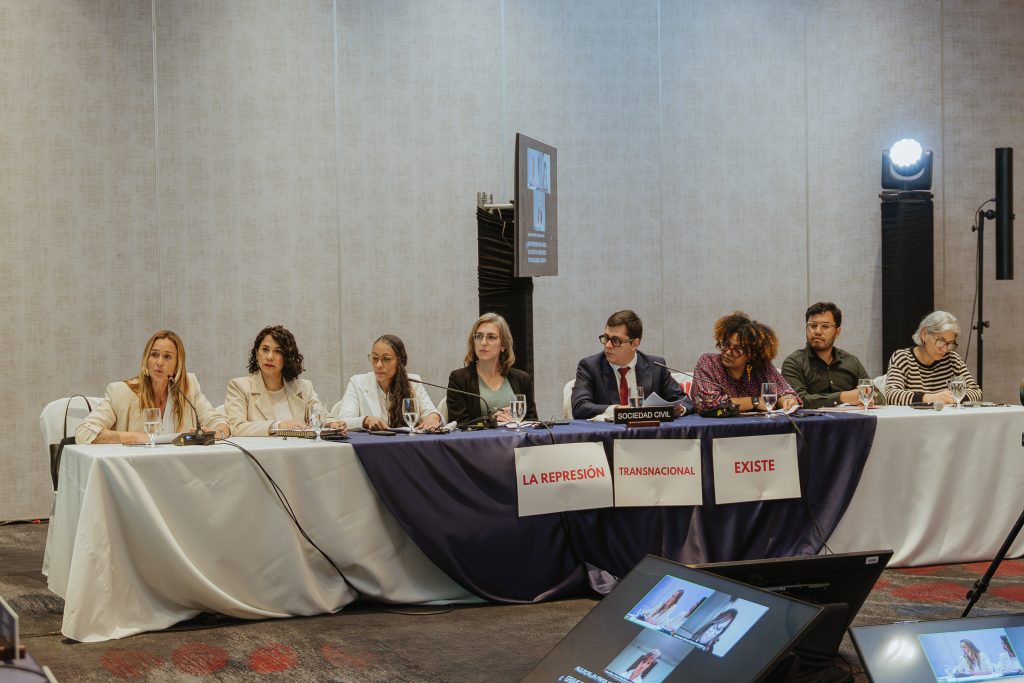
During the hearing, they denounced murders, attempted homicides, persecution, and harassment in the countries where they have sought refuge after being forced into exile due to repression by the authoritarian regimes in their countries of origin.

Claudia Vargas warned that the Nicaraguan regime continues to persecute opposition figures even outside its territory. “The regime’s persecution does not end when we cross the border. On the contrary, it transforms, expands, and reaches us even where we seek refuge,” she said. She also denounced the arbitrary deprivation of nationality affecting more than 450 people, which has resulted in the annulment of documents, academic records, pensions, and property.

She also recalled that at least five murders of Nicaraguan opposition figures in exile have already been documented, including the killing of campesino leader Jaime Luis Ortega in Costa Rica in 2024 and that of her husband, Roberto Samcam, a former major in the Nicaraguan Army and political analyst who was murdered in San José in June 2025. “His assassination represented a message directed at the exile community: an attempt to silence us and a demonstration of power beyond borders,” she stated.

“In the face of this serious problem, it is urgent that states in the region, especially host countries, recognize the fight against this form of persecution as part of their international protection obligations,” Vargas added.

For his part, Luis Peche explained that he was forced to leave Venezuela in 2025 following the increase in political persecution after the electoral process. The activist reported that he was the victim of an assassination attempt in Bogotá in October last year, when armed men opened fire on him and on human rights defender Yendri Velásquez. Peche received six gunshot wounds and Velásquez eight. Both survived the attack and are currently out of danger. “This fear is not abstract; it is concrete and persistent. It is part of a regional pattern of transnational repression that seeks to silence those of us who denounce these abuses,” he said.

From Cuba, Kirenia Yalit Núñez denounced that the Cuban regime has developed mechanisms of extraterritorial persecution against activists and journalists in exile. She recounted that she has faced numerous incidents of harassment in different countries, including acts of intimidation, surveillance, and migration-related obstacles. “The Cuban regime projects its intimidation beyond its borders to silence those of us who continue to denounce human rights violations from exile,” she said.

During the hearing, Cuban lawyer Laritza Diversent, director of the organization Cubalex, also participated. She warned that transnational repression seeks to silence critical voices even outside their countries of origin. Diversent urged the IACHR to recognize and systematically monitor this phenomenon, strengthen protection mechanisms for exiled individuals—especially in host countries such as Costa Rica, Colombia, and the United States—and promote coordinated regional responses to the extraterritorial expansion of political persecution.

She also called on the Commission, as it has done in other countries in the region, to establish a specific mechanism to monitor the humanitarian crisis and serious human rights violations in Cuba, in order to document these patterns and strengthen international accountability mechanisms.

During the hearing, the Group of Human Rights Experts on Nicaragua (GHREN) and the Independent International Fact-Finding Mission on the Bolivarian Republic of Venezuela participated jointly for the first time. These bodies noted that transnational repression is a real phenomenon affecting opposition figures and human rights defenders from Nicaragua and Venezuela, and emphasized the importance of continuing to investigate and document these patterns of persecution beyond national borders.

Race and Equality will continue to monitor and denounce the human rights violations suffered by activists and defenders from Cuba, Nicaragua, and Venezuela. We reiterate the need for states in the region to strengthen protection measures for exiled individuals and to ensure effective investigations into acts of transnational persecution, as well as coordinated regional responses to this phenomenon.
The collective manifesto of six women activists from Latin America and the Caribbean

Washington, D.C., March 6, 2026—On February 19, six women activists from Brazil, Colombia, Cuba, Mexico, and the Dominican Republic gathered for a virtual meeting that we at Race and Equality called “When Women Create, Memory Endures.” For an hour and a half, they shared who they were, where they were fighting from, and the realities they were facing in their territories. From that exchange, a collective manifesto was born that takes on special meaning today in the context of March 8, International Women’s Day.

Participants in this space included Eva Rafaela Calça, from Rede Trans Assis in Sao Paulo, Brazil; Andrea Ceballos, from the Indigenous Organization of the Pasto Territory in Colombia; María Camila Zúñiga, from the Movement of United, Diverse, and Emancipated Women (Mude), also from Colombia; Lourdes Esquivel, member of the Damas de Blanco organization in Cuba; Daniela Islas, from the Afrocaracolas collective in Mexico; and Estefany Feliz Pérez, from the Reconoci.Do youth movement in the Dominican Republic. For many of them, it was the first time they had shared a common space among such diverse struggles, but all driven by the same urgency: dignity.

The exercise culminated in the writing of a manifesto that reflects their collective voice and their main demands:

We, the women of Latin America and the Caribbean, unite in a powerful cry to demand equality and justice. Love and strength are what sustain us in this daily struggle.

From yesterday and today, we recognize the strength and determination of our history. We are the driving force. We are treasures of the world.

We fight to feel safe and equal, to be recognized and treated with dignity, from an anti-racist and decolonial perspective.

Today and always, we demand respect and freedom in all spaces!”

This call does not come out of nowhere. Latin America and the Caribbean continue to be marked by structural violence against women. In the last five years, at least 19,254 femicides have been recorded in the region, according to ECLAC’s Gender Equality Observatory for Latin America and the Caribbean (OIG). In most cases, violent deaths are perpetrated by partners or ex-partners, demonstrating that gender-based violence continues to be present in everyday spaces.

Femicide Violence in the Region

Brazil tops the most alarming figures. In 2025, it recorded 1,470 femicides, the highest number in the last decade, an average of four women murdered per day, according to data from the Ministry of Justice. In this context, Eva Rafaela Calça insisted that violence is not limited to murder: it is also expressed in exclusion and overload. For her, there is an urgent need for “a public space that values childhood as a responsibility of society as a whole, and not just of the mother,” because often “the mother is overburdened,” as well as policies that expand job opportunities for trans women “beyond informality and prostitution.” Her reflection connects femicide violence with the lack of care policies and the structural marginalization of trans women.

In Colombia, where the Colombian Observatory on Femicide reported 973 cases in 2025, impunity remains an open wound. María Camila Zúñiga recalled that, in addition to demanding justice for the murders, it is essential that “the work that women do with children, from the territories, be recognized” and that their lives be dignified. “We know that when a woman is murdered, justice does not always come,” she added.

In Mexico, where the Executive Secretariat of the National Public Security System recorded 721 femicides in 2025, violence is intertwined with structural racism. Daniela Islas warned that for Afro-Mexican women, recognition is also urgent: “What we need most urgently is recognition of our rights, more public policies for Afro-Mexican women, where we are guaranteed medical care.” She also referred to what she most desires: “We imagine a world without racism, without discrimination, where our rights as Afro-Mexican women are recognized and protected.” Gender-based violence in her territory cannot be separated from racial discrimination.

In Cuba, independent organizations such as the Alas Tensas Gender Observatory (OGAT) and Yo Sí Te Creo en Cuba (YSTCC) recorded 48 femicides in 2025 and warn that these crimes are the result of prolonged violence. Lourdes Esquivel expressed it from the harshness of her reality: “In Cuba, all women’s rights are violated. They imprison our children, they kill them, they beat us. We go hungry. There are children who have nothing to eat.” Her testimony reminded us that violence also manifests itself in hunger, repression, and daily pain.

In the Dominican Republic, where 59 murders of women were recorded last year (according to the Vida Sin Violencia Foundation), these figures coexist with policies and practices that particularly affect migrant women and women of Haitian descent. Estefany Feliz Pérez reported that, without identity documents, “they do not receive health care, nor can they study,” and that there is “persecution against Haitian women and Dominican women of Haitian descent” that even involves arbitrary detentions and undue payments.

Globally, women have only 64% of the legal rights that men have, according to UN Women. At the current rate, closing the gaps could take centuries. Against this backdrop, the virtual meeting on February 19 was more than just a symbolic space: it was a commitment to regional coordination.

This manifesto is also proof that it is possible to build agreements amid diversity. Six women from different backgrounds, with their own stories and struggles, managed to come together without having met before, listen to each other attentively, and recognize each other in their differences. In this exercise in honest and respectful dialogue, they identified common needs and forged a collective voice. This virtual space not only allowed them to share complaints, but also to demonstrate that regional coordination is a powerful tool when it is based on listening, respect, and the awareness that no struggle is isolated.

At Race and Equality, we reaffirm our commitment to giving a voice to those who resist from the territories and to supporting their demands. Because when women create together, memory endures; and when memory endures, the future is also built.


Cuba’s independent civil society, ready for a democratic transition

For more than a decade, we have been fortunate to work with Cuba’s independent civil society. We have seen their commitment to human rights, their dedication to documenting the violations that happen in the country, and their courage in exposing them. We have witnessed—through urgent messages and calls that lead to reactions by our legal team—arbitrary detentions, summary trials, surveillance, harassment, raids, forced exile, and, more recently, blackouts and food and medicine shortages. We have also faced our own negative impacts from this work – personal and institutional attacks, as well as skepticism on the part of former allies who have questioned our human rights work in general because of our work exposing the Cuban reality.

As a capacity building organization, we have trained independent activists on and off the Island on civil society engagement with human rights protection mechanisms. Through systematic documentation of human rights violations – analyzed according to the international legal standards to which the Cuban State has adhered – we have supported them to denounce cases of torture, enforced disappearance, censorship, and discrimination before the Inter-American Commission on Human Rights and United Nations Treaty Bodies and Special Procedures. By advocating for Cuba’s compliance with its international human rights obligations, our partners have been laying the groundwork for democratic transition for years. Their work is not merely opposition; it is preparatory governance.

While Washington and Havana negotiate the future of the island nation, the work, dedication, and perseverance of independent activists, journalists, and artists on the Island and in exile to fight for human rights and promote democratic ideals should not go unrecognized. They are the ones who have been collecting and sharing the evidence of the Cuban regime’s atrocities and this documentation should serve as a key element of any future government transition. While the Cuban government has maintained a monolithic façade, a diverse and resilient independent civil society has been quietly building the architecture of a free society from the ground up. The future of Cuba cannot happen without them.

The international community has recognized that in any transitional justice process, five elements must be considered: truth, justice, memory, reparation, and guarantees of non-repetition. It is not possible to achieve any of these without records of what has occurred during the undemocratic era and Cuban human rights defenders have been preparing already, as independent journalists break the state monopoly on information (truth); independent lawyers file habeas petitions before Cuban courts and cases before the Inter-American Commission on Human Rights (justice); activists document patterns of abuses committed by State actors (memory); community groups provide aid where the State fails (reparation); and organizations like ours provide the tools to foster civic dialogue and democratic norms (non-repetition).

The most profound preparation lies in the commitment to the historical record. By creating databases of human rights violations and preserving the testimony of victims, independent groups are preventing the “erasure” that often follows authoritarian regimes. They understand that you cannot have justice without a record of the crime, and you cannot guarantee non-repetition if the history of the past is allowed to vanish into state archives. This is not just protest; it is the fundamental administrative labor required to restore the rule of law.

The international community must stop viewing Cuba as a passive recipient of history. The groundwork for a democratic transition—the human capital, the legal theories, and the civic courage—is already in place. The transition will not be a gift from the top down; it will be the formal recognition of a reality that independent civil society has been living for decades. Cubans are not waiting for democracy to be handed to them; they have been building it, brick by brick, in the face of immense adversity. It is time the world starts paying attention to the foundation they have laid.

Statement written by:

Carlos Quesada, Executive Director

Christina M. Fetterhoff, Director of Programs

  • Learn more about our work in Cuba over more than a decade here.


Cuba’s Authoritarian Regime Forces Cuban Activist Leticia Ramos, Member of the Ladies in White, into Exile

Washington, D.C., February 10, 2025 — On Monday, February 9, Cuba’s authoritarian regime barred Cuban activist Leticia Ramos, a member of the Ladies in White movement, from entering the country, forcing her into exile. Ramos traveled from the United States to Cuba, but once there, authorities denied her the right to reunite with her family, withheld her luggage, and ordered her to leave the country, forcing her to return to Miami.

Last January, during an interview with Race and Equality, Ramos expressed her fear that the Cuban regime would deny her return to the Island after traveling to the United States to receive medical treatment, a systematic practice used to silence, punish, and force activists into exile. That fear became a reality yesterday. From the Institute, we are accompanying her and have assumed her legal representation in this process, just as we have provided ongoing support to the members of the Ladies in White before the Inter-American Commission on Human Rights (IACHR), which since October 2013 has granted precautionary measures “to preserve the life and personal integrity” of the women who make up the collective.

Between Resistance and Repression

Leticia Ramos has been a member of the Ladies in White since 2004, when she joined as a supporting member, accompanying women whose relatives were imprisoned during the Black Spring of 2003. Since then, she has consistently taken part in peaceful actions—such as attending Mass dressed in white and carrying flowers—to demand the release of individuals imprisoned for political reasons in Cuba.

Following the death under “suspicious circumstances” of Laura Pollán, founder of the movement, in 2011, Leticia was elected coordinator of the Ladies in White group in the province of Matanzas. From that point on, state harassment intensified, including beatings, threats, constant surveillance, arbitrary detentions, and restrictions on her right to freedom of movement. For nearly nine years, she was subjected to travel restrictions and barred from leaving the country.

Reprisals also extended to her family. Ramos is the mother of two children: one who resides in the United States, and another, Randy Montes de Oca Ramos, who lives in Cuba and has been subjected to persecution, detentions, and criminal proceedings based on false charges, as a means of pressuring his mother to abandon her activism. In 2018, Randy served a six-month sentence of house arrest following public protests carried out by Leticia.

Between 2013 and 2018, Ramos was detained on numerous occasions, at times being deprived of her liberty up to four times in a single week. She attempted to document these acts of repression, but the information was lost following raids on her home in 2016, 2018, and 2019, during which state agents confiscated work materials, electronic devices, and items linked to her activism.

During the protests of July 11, 2021, Leticia decided to demonstrate in Cárdenas despite her family facing a severe case of COVID-19. In that context, she recalled that it was possible to perceive “the regime’s fear in the face of an unarmed people, but one determined to achieve its freedom.”

The forced exile of Leticia Ramos is part of a broader pattern of repressive practices used by the Cuban regime to punish human rights defenders through forced exile, family separation, and constant intimidation.

At Race and Equality, we recognize the trajectory, courage, and resilience of Leticia Ramos, and we reiterate our commitment to accompany her and to denounce this serious violation of her human rights, as well as the broader strategy of silencing activists in Cuba.


We condemn violence against Danne Belmont, trans leader and executive director of the GAAT Foundation in Colombia

Bogotá, February 2, 2026 – The International Institute on Race, Equality, and Human Rights expresses its solidarity with Danne Belmont, executive director of the Trans Support and Action Group Foundation (GAAT), and her partner, who were victims of transphobic violence on February 1, 2026, in Bogotá, Colombia.

At Race and Equality, we strongly reject all forms of violence based on prejudice, particularly that directed against people because of their gender identity or sexual orientation. This incident constitutes a serious violation of human rights and is part of a broader context of structural violence that transgender people in the region persistently face.

The Inter-American Commission on Human Rights (IACHR), in its country report, indicated that Colombia is one of the countries in the region with the highest number of violent deaths of LGBTI people. Between 2022 and 2023 alone, there were 302 murders. Colombia ranks third in Latin America in terms of the number of murders of transgender people, which highlights an extremely dangerous situation. In turn, according to figures from the Defensoría del Pueblo, as of May 2024, this institution had dealt with nearly 290 incidents of violence against people with diverse sexual orientations and identities, including physical violence.

In its observations following its 2024 on-site visit, the IACHR warned of the persistence of violence against this population and the obstacles that LGBTI people face in accessing justice, especially in areas affected by armed conflict. Similarly, the Defensoría del Pueblo has warned of an increase in extreme violence against women and people with diverse sexual orientations and gender identities, both in private and public spaces, and insisted that every femicide and transfemicide is preventable if the State acts in a timely manner.

We deeply recognize and value the work that Danne Belmont has done as a trans leader and human rights defender, as well as the historic work of the GAAT Foundation in promoting, protecting, and defending the rights of trans people, particularly those in situations of greater vulnerability. Attacks against social leaders and human rights defenders seek to silence voices that are fundamental to building more just and inclusive societies, and cannot be tolerated.

We urgently call on the Colombian State and the competent authorities to conduct prompt, thorough, and gender-based investigations, guaranteeing effective access to justice, the punishment of those responsible, and the adoption of adequate protection measures for Danne Belmont and her partner.

At Race and Equality, we reiterate our commitment to the eradication of transphobia, discrimination, and violence, and we reaffirm that the dignity, life, and integrity of transgender people must be fully guaranteed.

To Danne, her partner, and the GAAT Foundation: know that you are not alone. We stand with you in solidarity and respect, and we reaffirm our commitment to walk alongside you, support your struggles, and raise our voices firmly and consistently.


Museo V: Memory, Art, and Resistance Against Gender-Based Violence in Cuba

Washington, D.C., January 27, 2026 — In a context marked by repression and the silencing of gender-based violence in Cuba, the Virtual Museum of Memory Against Gender-Based Violence—known as Museo V—was created in 2022. Led by Cuban journalist and writer María Matienzo, now living in exile in Madrid, the project transcends the traditional museum format to establish itself as a platform for denunciation, reflection, and collective creation, grounded in a feminist, anti-racist, and intersectional perspective.

Museo V initially emerged as a proposal to make political violence in Cuba visible, particularly violence against women and people with diverse gender identities and sexual orientations. Over time, the project expanded its scope by incorporating the participation of creators and activists from other countries in the region, as well as the analysis of international contexts through various human rights–focused workshops.

The museum functions as a space for exchange and collective construction. “It is a space where people go to give, to contribute, and to receive information,” explains its director. This work is grounded in a clear political stance: an intersectional and anti-racist approach that runs through all of its actions. “There is no perspective within the museum that is not anti-racist. This is one of the major battles that the people of Cuba and the rest of the world must fight.”

Museo V brings together artists and creators working from geographic, political, and symbolic margins, contributing diverse and critical perspectives. One of the project’s central goals is to insert Cuba into global conversations, breaking the imposed silences around political and gender-based violence that have historically been denied or rendered invisible.

Due to the impossibility of having a physical space on the island, the museum exists exclusively in a virtual format. However, its vocation remains deeply Cuban. “We do not consider ourselves a virtual museum for migration or exile. We consider ourselves a virtual museum for Cuba—a Cuba that needs to return to what it once was culturally: vanguard, revolutionary,” Matienzo states.

The workshop on political violence based on gender, led by attorney Laritza Diversent of the organization Cubalex, holds a central place within Museo V and is one of the contents most highlighted by its director. “This workshop is important because it is, practically, the very reason for the museum’s existence,” Matienzo affirms, underscoring the value of expert voices that today work from exile after being persecuted by the Cuban regime.

At Race and Equality, we highlight initiatives like this that document and narrate the experiences of women and people with diverse sexual orientations and gender identities. We call on the authoritarian regime in Cuba to guarantee their protection and respect their rights, putting an end to repression and the multiple forms of violence they face—especially when they challenge state policies.

To learn more about this space, visit its website at museov.org and follow its content on social media at @museovbg.

25N: Women Resisting and Transforming the Region, Even Under Attack

Washington, D.C., November 25, 2025.– In Latin America and the Caribbean, violence against women defenders is not an isolated event: it is a structural pattern that crosses borders, regimes and territories. Despite the contexts of racism, criminalization of activism, forced displacement, territorial dispossession, and repression, women continue to sustain struggles that are indispensable for democratic life, for racial justice, for the autonomy of their peoples, and for the freedom of those who today face state violence.

This International Day for the Elimination of Violence against Women, the Institute on Race, Equality and Human Rights (Race and Equality) recognizes women from Brazil, Colombia, Cuba, Nicaragua, Mexico and the Dominican Republic, who from different spaces exercise resistance that is born from the body, memory and territory. Their voices face historical inequalities, authoritarian regimes and extractive models, but they do not stop building alternatives of hope, justice and freedom.

Each of them carries out struggles that transform entire agendas even when the risks increase, even when their own country or powerful groups try to silence them, even when violence touches the most intimate. Today we reaffirm: their struggle is indispensable, their strength is unbreakable and their resistance sustains an entire region that continues to bet on life.

Maria do Socorro, Makira`eta – Brazil

For Maria do Socorro, exercising resistance is embodying the ancestral strength of women who have always fought for land, life and memory. Their resistance is a spiritual and political act: they exist when they speak their language, when they transmit the knowledge of the elders, when they participate in rituals, when they demand respect in decision-making spaces and when they denounce the violence that affects Indigenous peoples.

It is sustained by the strength of the forest, of the songs, of the seeds and of the indigenous youth who continue the struggle. Its resistance is woven with the body and the spirit; it is done with love, care and confrontation. Maria do Socorro recalls that when indigenous women come together, their knowledge and voices become a collective power that is impossible to silence.

Yanelys Nuñez, Cuban activist exiled in Spain and coordinator of the Gender Observatory of Alas Tensas

For Yanelys Nuñez, to resist is to exist. It is to sustain oneself in the body of a black, migrant and Cuban woman in a country that, although democratic, does not always understand the depth of exile or the weight of carrying a history marked by censorship and state control.

From Spain, Yanelys carries the distance, the separation from her family, the mourning of truncated projects and the nostalgia of those who were left behind. Even so, she continues to denounce that in Cuba there are no basic guarantees to exercise rights as elementary as expressing oneself, associating or demonstrating. Their resistance is also the living memory of the silenced Cuban feminist movement, of the multiplying exile and of a long history of opposition erased by the regime.

What sustains her is not only her political commitment, but her deepest convictions: the urgency of existing with dignity, the Yoruba spirituality that accompanies her and the strength of political prisoners.

Claudia Vargas, human rights defender and widow of retired Major Roberto Samcam

For Claudia, to resist is to refuse the symbolic disappearance of her husband, Roberto Samcam, victim of a transnational political crime. Her resistance is a radical affirmation: she will not allow the truth to be erased or his name to be diluted in impunity. Every word she utters is memory, denunciation and justice. She does not do it only for herself, but for all the families touched by the state violence that overflows the Nicaraguan borders.

It is sustained by the conviction that justice is a right and trust in human rights mechanisms so that this crime does not go unpunished. Claudia also resists for those who are still persecuted today; she knows that her voice, in naming the truth, protects other bodies at risk. She is accompanied by the support of refugee women, of the collectives, and the certainty of speaking from a country that still does not give up hope.

Rosa María Castro Salinas, activist and Afro-Mexican federal deputy

For Rosa María, to resist is to defend territories, bodies and history in the face of a system that has made Afro-Mexican peoples invisible for centuries. Their resistance simultaneously confronts structural racism, discrimination and an extractivist model that devastates territories and deepens inequalities. In a context where public policies ignore Black communities in the climate fight, resisting also means demanding climate justice with a racial and gender approach.

Its strength comes from a commitment of more than two decades to Afro-Mexican communities, from the voices that defend rivers, seas, mountains and territories, and from young people who understand the climate crisis as a crisis of dignified life. Rosa María argues that the construction of a just future requires Afro-centric public policies and decisions that fully recognize Afro-Mexican peoples as key actors in confronting the environmental crisis.

Patricia Sandoval, coordinator for Mexico of the Continental Link of Indigenous Women of the Americas (ECMIA)

For Patricia, a Purépecha Indigenous woman (Mexico), resistance is to defend life in the face of a model that is destroying territories and directly affecting indigenous women. Climate justice, for her, is not an abstract slogan: it is the urgency of protecting the water, forests and natural resources that sustain her peoples. Resisting implies confronting extractivism, militarization and criminalization, but also affirming the right to decide on land and the collective future.

What sustains it is a spirituality that understands life as a framework: if one falls, they all fall; if one gets up, they all get up. Their strength comes from knowing that each voice that is raised changes decisions and opens paths for others. “Our struggle is not extinguished, it is amplified,” she says.

María Camila Zúñiga, Movimiento MUDE – Colombia

For María Camila, being a diverse and gender-dissident black woman means resisting systems that seek to deny her existence. Her resistance is expressed in the creation of collective tools to survive and transform themselves; in the articulation and meeting that sustains the MUDE Movement, a space that not only accompanies, but also builds community fabric for black women, children and black LGBTIQ+ people. For her, “it will be collective or it will not be”.

What sustains her is the dignified rage, the shared struggles, the processes that are woven together and the love of her sisters. Its strength comes from a profound certainty: nothing is conquered alone. The collectivity is a refuge, but it is also organized resistance to a system that constantly denies them rights, resources, and recognition.

Luz Marina Becerra, Coordinator of Afro-Colombian Displaced Women in Resistance (La Comadre) – Colombia

For Luz Marina, resisting as an Afro-Colombian woman in a context marked by racism, sexism, and classism means raising her voice with dignity for respect, recognition, inclusion, rights, memory, and the territories of Afro-descendant peoples.

She affirms that her struggle is sustained by love, conviction, and the legacy of her ancestors, as well as by the hope that her struggles will transform history so that new generations can grow up in a world of equality, opportunity, and respect for diversity.

Elena Lorac, co-coordinator of the Reconoci.do Movement – Dominican Republic

For Elena, to resist is to defend the life and dignity of Dominican women of Haitian descent in a country where their rights have historically been denied. As part of the Reconoci.do Movement, her struggle is born from the dispossession of nationality that this population lives and that has marked her existence at all levels: without documents, without full recognition and without basic guarantees. And she recalls that this institutional violence affects women more harshly, who also face historical inequalities and deeply precarious conditions in the bateyes.

She is sustained by knowing that her struggle is just and urgent, as well as her commitment to her community, especially to the women who carry the impact of dispossession on their shoulders, and to the families who continue to resist despite structural discrimination.

The voices of these women reveal that resistance is not only a response to violence: it is a way of existence and of the future. From forced exile to the defense of the territory; from the fight against structural racism to the demand for justice in the face of state crimes; from ancestral spirituality to black feminist organization: all these resistances are indispensable to build freer, more dignified and just societies.

At Race and Equality, we are firmly committed to supporting and strengthening these women in their struggles and raising their complaints and demands before the Inter-American and Universal Human Rights Protection Systems.

Cuban organization Ladies in White denounces violence perpetrated by Cuba’s authoritarian regime before the IACHR

Miami, November 19, 2025 – “Arbitrary detentions, forced disappearances, and threats.” These were some of the acts of violence reported on Monday, November 17, by members of the Cuban organization Ladies in White during a private hearing before the Inter-American Commission on Human Rights (IACHR), held as part of the 194th Period of Sessions in Miami, United States.

The delegation was made up of activists Lourdes Esquivel, Blanca Reyes, and María Elena Alpízar, who participated as representatives of the organization in exile. Esquivel recounted the state repression she suffered until December 2022, when she was exiled. Forced exile continues to be one of the practices used by the Cuban regime to punish and silence women human rights defenders, as was the case with activist Aymara Nieto, also a member of the Ladies in White, who was released in August 2025 on the condition that she leave the island.

The hearing was requested by the Institute on Race, Equality, and Human Rights. During his statement, lawyer Fernando Goldar recalled that two members of the Ladies in White remain imprisoned: Sissi Abascal and Saylí Navarro, incarcerated for belonging to the organization and demanding respect for their fundamental rights.

Before the IACHR, the delegation composed of representatives of the Ladies in White and Race and Equality exposed the systematic pattern of violence perpetrated by the Cuban State for more than two decades. This includes thousands of arbitrary detentions without official record, forced disappearances, constant surveillance, harassment, and threats directed at both activists and their families. They also denounced differential treatment based on gender and race, including sexualized insults, reprisals linked to their caregiving roles, and specific discrimination against members of African descent. They also pointed to criminalization through ambiguous criminal charges, the impossibility of exercising their religious freedom due to systematic detentions on Sundays, and restrictions imposed since 2021 on meeting or accessing the organization’s headquarters. None of these incidents has been investigated, perpetuating a situation of absolute impunity.

The testimonies presented reflect how a group of women, initially mobilized to demand the release of their relatives imprisoned for political reasons (in 2003), has established itself as a benchmark in the defense of human rights in Cuba, in the region, and internationally. However, the attacks and reprisals they face seek to remove them from public life and disrupt their work.

The Institute on Race, Equality, and Human Rights reiterates its commitment to supporting the Ladies in White and to continuously denouncing violations committed against women activists in Cuba. We call on the IACHR to condemn these acts and on the international community to support and accompany the legitimate demand for respect and protection for the members of this organization.


MUDE, a shelter threatened for defending the rights of black women and children in Palmira, Colombia

Bogotá, October 20, 2025 – On July 15, 2024, members of the Movimiento de mujeres unidas, diversas y emancipadas (MUDE, by its initials in Spanish) reported that, in the early hours of the morning, several people violently entered the house where the organization’s headquarters were located, in the municipality of Palmira, Valle del Cauca. Through their social media accounts, they made public how computers were destroyed, along with the shelter of more than 300 people, including children, adolescents, and black and diverse women from this region of Colombia who are beneficiaries of MUDE. 

That day, the women of this organization felt that the “last straw had been drawn,” after years of threats, harassment, acts of racism, transphobia, and hate campaigns spread through social media. They were left with a clear message: if they continue to do this work, their lives are in danger.

A year after the raid, the events remain unpunished and the members of MUDE continue to denounce what happened and demand recognition and guarantees of their rights in this area of the Colombian Pacific. “We continue to call on the authorities and other organizations to listen to us and respond to our demands. We want to know that we have support, that our lives matter, that people care about what happens to MUDE, to children, and to diversity,” says María Camilia Saa, a member of the organization. 

The Movimiento de mujeres unidas, diversas y emancipadas was founded in 2019 and, since then, has accompanied and transformed the lives of more than 6,000 children, adolescents, women of African descent, and diverse women, along with their families, in Palmira and other municipalities in Valle del Cauca. Sady Carreazo, another member, affirms that MUDE is a space for “collectivization.” 

“Coming together guarantees the lives of Black people; it is another way in which we can be and live in freedom. It is another opportunity to study, work, be, and express ourselves,” adds Carreazo. The organization promotes advocacy, training, and visibility strategies with an ethnic and diverse focus through art and music. One example of this is MUDE’s Agojie group, whose songs address issues such as Afro hair, feminism, and sexual and gender dissidence.

Following the attack, MUDE was forced to relocate its headquarters to another area of Palmira, while its members continue to report ongoing threats and harassment due to their diverse identities and their work defending the rights of their communities.

From the Institute on Race, Equality, and Human Rights (Race and Equality) expresses its support for MUDE and reiterates its urgent call on the competent authorities to act diligently, guarantee the protection of its members, and ensure that acts such as these do not go unpunished. Defending the lives, diversity, and leadership of Black and diverse women is an inescapable responsibility of the Colombian state.


Afro-descendant activists in the region condemn the effects of racism on Afro-descendant women

  • Five female leaders from Latin America and the Caribbean, along with Professor Justin Hansford, a member of the UN Permanent Forum on People of African Descent, participated in the discussion “Voices of the Diaspora: Women of African Descent in Resistance and Global Leadership” on September 18 in Bogotá.

Bogotá, September 22, 2025.– Within the framework of the regional consultation of the UN Permanent Forum on People of African Descent, which brought together more than 60 Afro-descendant activists from Latin America and the Caribbean, the Institute on Race, Equality and Human Rights (Race and Equality) held the discussion “Voices of the Diaspora: Women of African Descent in Resistance and Global Leadership,” which took place on Thursday, September 18 in Bogotá.

The meeting brought together women leaders from different countries in the region, who shared experiences regarding the multiple forms of violence and discrimination faced by Afro-descendant women, as well as the strategies of community building and resistance that they have implemented.

The president of the Central American Black Organization (ONECA), Afrohonduran Mirtha Colón, highlighted the significance of strengthening cultural identity among members of the younger generation. The coordinator of the Network of Afro-Latin American, Afro-Caribbean, and Diaspora Women, Afrobolivian Paola Yañez, emphasized that “we cannot talk about racism without talking about sexism, because they are so intertwined.” Meanwhile, Afromexican Teresa Mojica, president of the Petra Morga Afro-Mexican Foundation, called for the promotion of an Afro-descendant, Afro-centered, intersectional, and decolonial agenda. 

Afrodominican María Bizenny Martínez, coordinator of the Department of Human Rights and Political Advocacy at MOSCTHA, denounced discrimination and xenophobia toward the Haitian population, especially women. Meanwhile, Afrocolombian Luz Marina Becerra Panesso, legal representative of the Coordination of Displaced Afro-Colombian Women in Resistance (La Comadre), noted that the armed conflict in Colombia has exacerbated the vulnerability of Afro-Colombian women, many of whom remain silent out of fear.

After listening to the leaders, Professor Justin Hansford, member of the UN Permanent Forum on People of African Descent, highlighted the situation of Afro-Colombian women in Latin America and reiterated some of the recommendations raised by the activists during the discussion.

This dialogue offered a platform for collective construction and exchange, in which the voices of Afro-descendant women from the region and the diaspora illustrated the various ways in which racism and sexism affect their lives and reaffirmed their central role in the defense of rights and social development. It also served as a prelude for the activists, who also participated in the regional consultation of the UN Permanent Forum on People of African Descent, which was conducted on September 19 at the Colombian Foreign Ministry. They highlighted the need to visualize the reality of Afro-descendant women within the draft declaration, which is currently being developed by some members of the Forum.

Race and Equality remains committed to the promotion of initiatives and spaces that facilitate these types of meetings. Our objective is to continue to denounce the human rights violations experienced by Afro-descendant individuals in the region and to contribute to a world in which the dignity of all individuals is honored and all individuals have the opportunity to fully reach their potential.

Join Our Efforts

Help empower individuals and communities to achieve structural changes in Latin America.