International Day of Indigenous Peoples: Territorial Defense and Environmental Protection in Brazil, Colombia, and Nicaragua
Washington, D.C., August 10, 2026. – Every August 9, the International Day of the World’s Indigenous Peoples commemorates the invaluable contribution of these communities to the preservation of biodiversity, the […]
Washington, D.C., August 10, 2026. – Every August 9, the International Day of the World’s Indigenous Peoples commemorates the invaluable contribution of these communities to the preservation of biodiversity, the protection of ecosystems, and the fight against the climate crisis. Their territories are home to some of the planet’s most important ecosystems, and their ancestral knowledge has enabled them to conserve these ecosystems for generations.
Indigenous peoples manage and conserve territories that are home to a significant portion of the world’s biodiversity. As a result, attacks on their communities not only violate their individual and collective rights but also undermine the protection of forests, rivers, and ecosystems that are essential for addressing the climate crisis.
However, those who protect nature also face serious threats. The expansion of extractive activities, illegal land occupation, the presence of armed groups, and the lack of state protections have made defending their territory a high-risk activity for many indigenous communities in Latin America. Brazil, Colombia, and Nicaragua reflect different manifestations of the same reality: the violation of territorial rights endangers not only the survival of indigenous peoples but also the protection of the environment.
Brazil: The Amazon Under Pressure
In Brazil, violence against indigenous peoples is closely linked to disputes over their territories and the expansion of activities such as illegal mining, deforestation, and irregular land occupation, especially in the Amazon. Between 2013 and 2023, more than 30 indigenous leaders were murdered, according to the Inter-American Commission on Human Rights (IACHR), while national and international organizations continue to warn about the threats and invasions faced by communities such as the Uru-Eu-Wau-Wau people.
The pressure on indigenous territories also has large-scale environmental consequences. The 2026 Atlas of Violence recorded an increase in homicides of Indigenous people in the state of Amazonas, which also has the highest number of Indigenous lands threatened by deforestation, according to Imazon. The expansion of these illicit activities jeopardizes the conservation of the Amazon and puts the physical and cultural survival of Indigenous peoples at risk.
Indigenous women also face intersectional forms of discrimination and violence. A study by the Federal University of Minas Gerais, published in The Lancet, found that indigenous women between the ages of 10 and 49 die, on average, eight years earlier than white women, in a context marked by violence, social exclusion, institutional discrimination, and barriers to accessing health care.
Colombia: Defending the Territory Amid the Conflict
In Colombia, territory forms the foundation of indigenous peoples’ identity, spirituality, and autonomy. However, the ongoing armed conflict, the presence of armed groups, and illicit economies have turned many indigenous reserves and ancestral territories into scenes of constant violence.
This violence particularly affects those who defend the land and the environment. According to Global Witness, 48 environmental and land defenders were killed in Colombia in 2024, the highest number in the world for the third consecutive year. In 2023, 79 environmental and land defenders were killed, 31 of whom were Indigenous. Between 2012 and 2023, Colombia recorded a total of 461 murders of land and environmental defenders—the highest number recorded worldwide during that period.
In its report The Impacts of Violence on the Human Rights Situation in Colombia (2025), the IACHR warns that indigenous peoples continue to be victims of homicides, threats, forced displacement, confinement, and the forced recruitment of children and adolescents. Traditional authorities and those leading efforts to defend their territories and protect the environment face particularly high risks, which weaken community structures and endanger the continuity of their ways of life.
The inadequate implementation of the Comprehensive Rural Reform and the Ethnic Chapter of the Peace Agreement, combined with impunity and limited protection measures, continues to hinder the effective guarantee of the territorial rights of indigenous peoples.
Nicaragua: Extractivism Exacerbates Land Dispossession
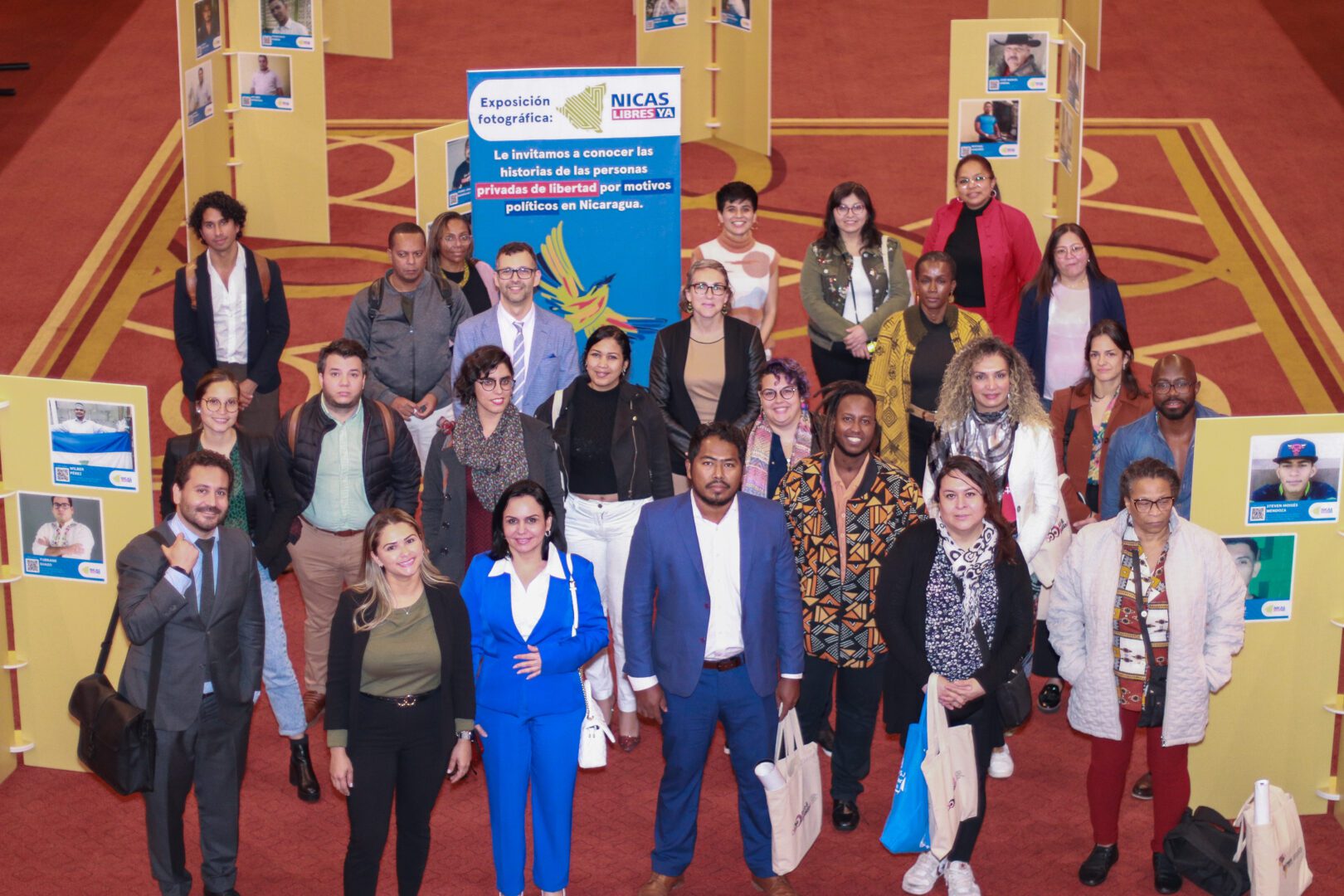
In Nicaragua, efforts to defend indigenous and Afro-descendant territories are facing increasing pressure due to the expansion of the extractive model. During the hearing “Impacts of Mining Concessions on the Human Rights of Indigenous and Afro-descendant Peoples”, held during the 196th Session of the IACHR, civil society organizations denounced that the State has intensified a policy that favors mining exploitation at the expense of the collective rights of these communities.
The organizations pointed out that the State has a long-standing failure to complete the land titling process for indigenous territories, thereby facilitating invasions by settlers, while legal and institutional reforms have weakened environmental safeguards and eliminated effective avenues for participation and consultation. As a result, mining concessions are moving forward without guaranteeing the right to free, prior, and informed consent of indigenous peoples and people of African descent.
According to information submitted to the IACHR, 62 mining concessions affect 18 indigenous and Afro-descendant territories, encroaching on 25.5% of their communal lands. The impact extends to 163 rivers, 80 streams, and nearly 1,900 kilometers of waterways, as well as protected areas of enormous ecological importance, such as the Bosawás and Río San Juan Biosphere Reserves.
The expansion of extractive industries has also intensified violence against communities. Between 2013 and 2024, at least 79 Indigenous people were killed in connection with land invasions and attacks by settlers on the Caribbean Coast, while Indigenous leaders continue to face criminalization and persecution for defending their territories. These events are taking place in a context that the IACHR has documented as one of violence, territorial dispossession, and impunity, with serious consequences for the physical and cultural survival of the indigenous and Afro-descendant peoples of the Caribbean Coast.
Against this backdrop of dispossession, violence, and institutional weakness, the death in state custody of Brooklyn Rivera, an advocate for the rights of indigenous peoples and a Ta Upla of the Miskitu people, stands out. He was arbitrarily detained in September 2023 and remained missing for more than 970 days.
Protecting the lands means protecting the future
The cases of Brazil, Colombia, and Nicaragua demonstrate that the protection of indigenous peoples cannot be separated from the protection of the environment. When their territories are invaded, exploited, or degraded, fundamental collective rights—such as identity, self-determination, culture, and the right to a healthy environment—are also violated.
On this International Day of Indigenous Peoples, Race and Equality reaffirms that states must guarantee the right of indigenous peoples to their territories, respect free, prior, and informed consultation and consent, protect those who defend the land, and ensure that economic development is never pursued at the expense of human rights.
Protecting those who have safeguarded nature for generations also means protecting the ecosystems on which our lives depend, and it is an essential step toward addressing the climate crisis and building more just and sustainable societies.