May 17: LGBTIphobia also manifests itself in violence, censorship, and exclusion
Washington, D.C., May 18, 2026.—Every May 17, the International Day Against LGBTI-phobia serves as a reminder that millions of people around the world continue to face violence, discrimination, and exclusion […]
Washington, D.C., May 18, 2026.—Every May 17, the International Day Against LGBTI-phobia serves as a reminder that millions of people around the world continue to face violence, discrimination, and exclusion because of their sexual orientation, gender identity, or gender expression.
In Latin America and the Caribbean, although some countries have made significant legal progress in recognizing rights, the reality remains marked by hate crimes, stigmatizing rhetoric, social exclusion, persecution of activists, and restrictions on fundamental freedoms.
On the occasion of the International Day Against LGBTIphobia, the Institute on Race, Equality, and Human Rights (Race and Equality) wishes to remind everyone that LGBTIphobia manifests itself not only through physical attacks but also through censorship, silencing, criminalization, lack of access to rights, and the inability to live freely and with dignity.
As we commemorate this day, we recognize that defending the rights of LGBTI+ people continues to be a defense of democracy, freedom, and human rights for all of society. Below, we share a brief overview of the human rights situation of this population in countries where Race and Equality advocates and works alongside partners.
Brazil: Legal Progress Amid High Levels of Violence
In Brazil, the situation of LGBTI+ people is marked by profound contradictions. Although the country has made significant progress—such as the recognition of same-sex marriage since 2013 and the right of transgender people to change their name and gender marker on identity documents without the need for surgery or court orders—thousands of people continue to face violence, discrimination, and exclusion.
Transgender people are the primary targets of these types of attacks, as evidenced by the fact that Brazil has recorded the highest number of murders of transgender people every year for the past 18 years, according to the Transgender Murder Monitor (TMM) of Transgender Europe and Central Asia (TGEU).
Added to this are the hate speech and political polarization of recent years, which have contributed to legitimizing attacks against LGBTI+ people and those who defend human rights.
Hate speech directed at women in political office in Brazil is rife with racist and transphobic remarks aimed at undermining their political participation, as in the case of Federal Deputy Erika Hilton, who was the target of transphobic remarks after being elected chair of the Committee on the Defense of Women’s Rights. Following her appointment, public statements were made questioning her gender identity and seeking to delegitimize her role in an institutional body dedicated to promoting women’s rights.
Recently, the actions of a representative came to light who, during a plenary session of the São Paulo State Legislative Assembly, performed a “blackface” act while delivering a speech opposing the rights of transgender women—an act that was widely criticized by human rights organizations and sectors of civil society.
Meanwhile, a study by the Marielle Franco Institute highlighted the severity of digital political violence directed specifically against Black women and LGBTQIA+ individuals; according to the study, 71% of the recorded threats involved references to death or rape, while 63% of the death threats made direct mention of Marielle Franco’s murder.
Cuba: Diversity Under Surveillance and Repression
In Cuba, the situation of LGBTI+ people cannot be analyzed without considering that seven years ago, on May 11, 2019, the historic 11M took place: an independent march against homophobia and transphobia that ended with arbitrary detentions, surveillance, and persecution of activists. That day marked a turning point for LGBTI+ activism on the island and highlighted the limits imposed by the state on free expression, peaceful protest, and independent organization.
Many of the people who participated in that demonstration have since faced harassment, criminalization, and even forced exile.
Although there have been some legal advances in recent years—such as the recognition of same-sex marriage and other family rights through the new Family Code—the reality for many LGBTI+ people continues to be marked by a lack of fundamental freedoms and guarantees.
The current economic, social, and political crisis on the island has deepened inequalities, precariousness, and vulnerability among broad sectors of the population, including activists, transgender people, and human rights defenders.
Against this backdrop, thousands of people have emigrated in search of decent living conditions, freedom, and security. LGBTI+ people are no strangers to this reality: many have been forced to leave the country after suffering persecution, censorship, or a lack of opportunities. Both from exile and from within Cuba, activists and organizations continue to denounce human rights violations and demand a society where diversity is not punished.
Colombia: Persistent Violence and Barriers to Living with Dignity
In Colombia, LGBTI+ people continue to face high levels of violence, discrimination, and exclusion, in a context marked by historical inequalities and the persistent impact of armed conflict and territorial violence.
Trans people, social leaders, and human rights defenders remain particularly vulnerable to threats, attacks, and hate crimes. The report “The Impacts of Violence on the Human Rights Situation in Colombia,” presented by the IACHR in December 2025, notes that between 2016 and September 2024, the Attorney General’s Office reported at least 33 murders of LGBTI+ individuals in social leadership roles, while in 2023 alone, civil society documented at least 13 cases.
On May 7 and 8, the organization Caribe Afirmativo reported the murders of two transgender women in Antioquia, bringing the total number of LGBTI+ murders recorded by its Human Rights Observatory to 29.
Amid this situation, civil society organizations are campaigning for the passage of the Comprehensive Trans Bill, also known as the “Sara Millerey Law,” in memory of the human rights defender and trans activist murdered in April 2025. This law seeks to establish a comprehensive legal framework that specifically regulates the rights of transgender people, from a perspective of intersectionality, a differential approach, and progressive rights.
In addition to physical violence, LGBTI+ people face stigmatizing rhetoric and disinformation campaigns that seek to discredit their rights and undermine the progress achieved through years of struggle and social mobilization.
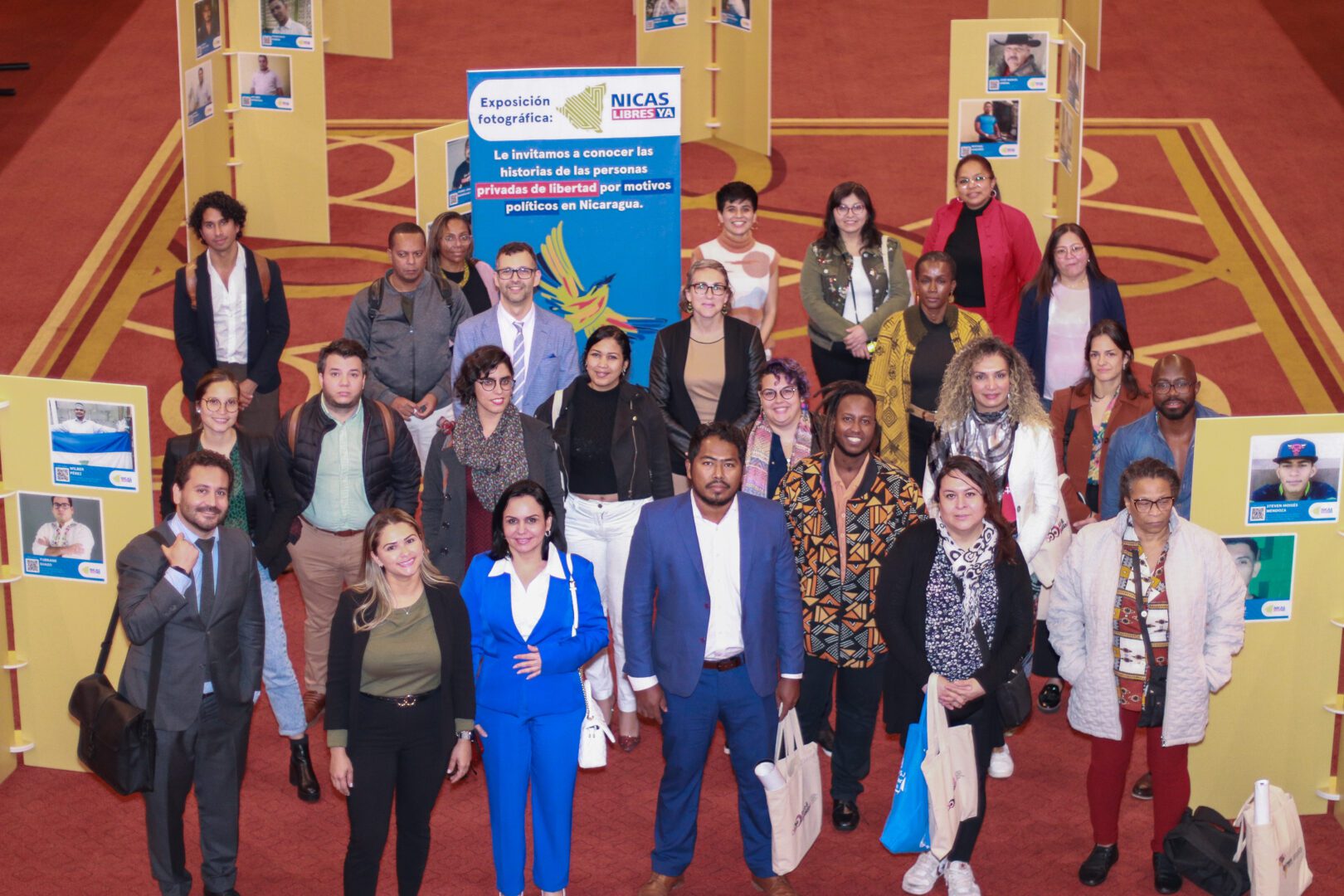
Nicaragua: Fear, Exile, and the Shrinking of Civic Space
In Nicaragua, the situation facing LGBTI+ people cannot be separated from the broader context of repression, the shrinking of civic space, and the persecution of critical voices and civil society organizations.
In recent years, the criminalization of activists, forced exile, the dissolution of organizations, and restrictions on fundamental freedoms have profoundly impacted those who defend human rights and support LGBTI+ people.
Although discrimination and violence against LGBTI+ people have historically been overlooked, the current repressive climate has heightened fear, censorship, and the lack of safe spaces to report abuses, organize collectively, or raise awareness of issues related to equality and diversity.
Many LGBTI+ people, activists, and human rights defenders have been forced to leave the country due to the risk of persecution, surveillance, or reprisals. From exile and through resistance within Nicaragua, they continue to denounce human rights violations and defend the right to live free from discrimination and violence.
Defending Rights Also Means Resisting
On the International Day Against LGBTIphobia, acknowledging the situation of LGBTI+ people in Latin America and the Caribbean also means recognizing that discrimination does not occur in isolation. Violence, censorship, persecution, and exclusion tend to intensify in contexts where democracy, freedom of expression, and civic space are also weakened.
Although there are legal frameworks and court rulings that recognize the fundamental rights of LGBTI+ people, everyday reality shows that effective access to equality and a life free from violence remains an unfulfilled promise.
Many people continue to live under threat, especially in outlying areas and historically marginalized communities.
At Race and Equality, we recognize the work of activists, organizations, and communities that, despite such adverse conditions, continue to resist, denounce human rights violations, and create spaces for support, remembrance, and dignity.