Political Imprisonment in Cuba and Nicaragua: Behind the Numbers, Lives and Rights Violated
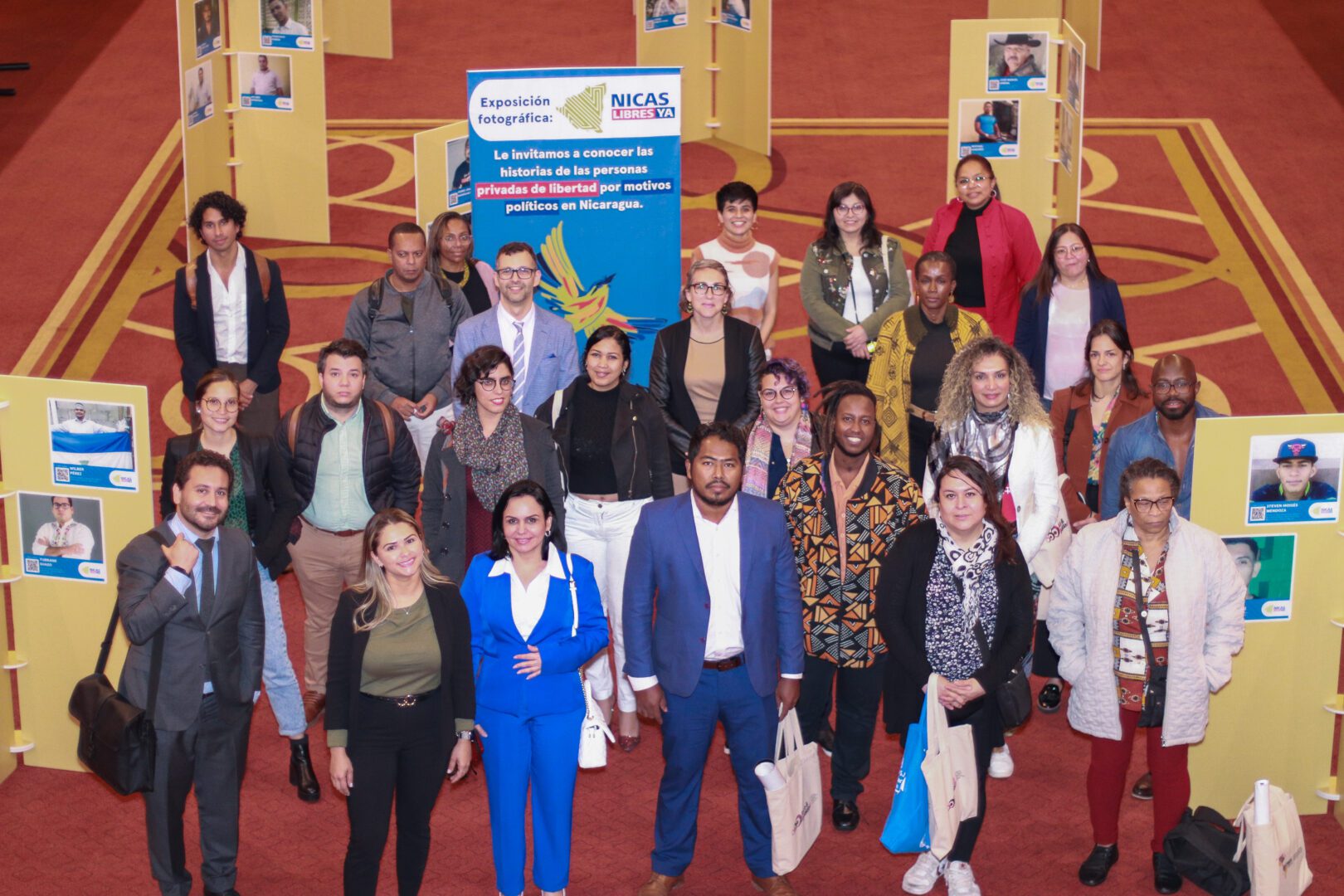
Washington, D.C., October 30, 2026. Hundreds of people remain imprisoned for political reasons in Cuba and Nicaragua, in contexts where persecution can target not only those who identify as members […]
Washington, D.C., October 30, 2026. Hundreds of people remain imprisoned for political reasons in Cuba and Nicaragua, in contexts where persecution can target not only those who identify as members of the opposition, but also human rights defenders, independent journalists, activists, and anyone who publicly criticizes the government.
On Political Prisoners’ Day, the Institute on Race, Equality, and Human Rights (Race and Equality) draws attention to the persistence of this crime, the violations faced by detainees, and the forms of control that can continue even after their release. Enforced disappearance and deaths in state custody represent some of the most serious manifestations of this reality.
Cuba and Nicaragua: The Statistics Behind Political Imprisonment
In Cuba, the organization Justicia 11J—a project of the organization Iniciativa para la Investigación y la Incidencia A.C., which has been documenting and denouncing political repression in Cuba since the historic protests of July 2021—reports that 832 people are being held in detention for political reasons. This figure reflects the persistence of political imprisonment and the need to keep the spotlight on those who remain incarcerated for exercising their fundamental rights.
In Nicaragua, since 2018, political imprisonment has become one of the main tools of repression. According to the most recent report from the Office of the United Nations High Commissioner for Human Rights (OHCHR), there have been 4,796 arbitrary detentions, generally for political reasons.
As of October 2026, the Mechanism for the Recognition of Political Prisoners in Nicaragua has identified 72 people who remain in detention for political reasons. Furthermore, 33 of these individuals are considered to be victims of enforced disappearance. The records also identify 16 women—including two minors—16 older adults, and 20 Indigenous people as political prisoners.
These figures should be interpreted in light of underreporting stemming from fear of reporting incidents, as well as the fact that civil society organizations describe a “revolving door” dynamic, in which new arrests coincide with releases from prison, meaning that a temporary reduction in the number of people incarcerated does not reflect a decrease in repression.
Who is affected by political imprisonment?
Political imprisonment can affect people who identify as members of the opposition or who are perceived as such by the authorities. In authoritarian contexts such as those in Cuba and Nicaragua, this perception can extend far beyond membership in a political party considered to be part of the opposition. Human rights defenders, independent journalists, activists, and citizens who voice criticism can become targets of persecution and imprisonment.
In Nicaragua, there have been reports of arbitrary arrests of individuals whose actions or statements critical of the authorities are not publicly known, while the reasons for their arrest remain unclear and give rise only to speculation.
In Cuba, the case of Anna Bensi and her mother, Caridad Silvente Laffita, illustrates how an act related to the exercise of freedom of expression can lead to criminal punishment: in October 2026, the Municipal People’s Court of East Havana sentenced them to two years of restricted freedom for recording and posting on social media a video of a police officer who had come to their home.
Release From Prison Does Not Always Mean Freedom
Understanding who is affected by political imprisonment also requires recognizing that persecution does not necessarily end upon release from prison. Subsequent restrictions, exile, and other forms of control can prolong its impact on the lives of individuals and their families.
Some of those released have been exiled, while others remain in the country under police surveillance and severe restrictions, such as the requirement to report daily to police stations or to account for their movements. In Nicaragua, people released from prison since November 2025 are held under a regime similar to house arrest and are silenced out of fear of further reprisals.
In Cuba, the case of independent artist Luis Manuel Otero Alcántara illustrates the consequences of this practice. After spending five years in prison following a conviction related to the exercise of his fundamental rights during the historic protests of July 11, 2021, his release from prison was conditional on his leaving the country.
Enforced Disappearance and Deaths in Custody: The Most Serious Consequences
Enforced disappearance is one of the most extreme forms of political imprisonment in Nicaragua. People are held incommunicado for prolonged periods, while their families remain unaware of their whereabouts, their health status, and the conditions in which they are being held.
Another extreme consequence is death in state custody. Since 2018, at least nine political prisoners have died in state custody in Nicaragua, according to records from human rights organizations. Among them is the Miskitu indigenous leader Brooklyn Rivera, who, after participating in the United Nations Forum on Indigenous Issues in April 2023, died on May 30 of this year while in state custody, following 971 days during which he was held in a situation of forced disappearance, incommunicado, without his family knowing his place of detention or being allowed to visit him.
During that period, Nicaraguan authorities kept his whereabouts secret and did not provide any information about his health. The Inter-American Commission on Human Rights (IACHR), the Office of the High Commissioner for Human Rights, the Group of Experts on Human Rights in Nicaragua, and other protection mechanisms expressed dismay and condemned his death while in state custody, highlighting the collective impact of this case on the Miskitu people and the defense of indigenous peoples’ territorial rights and autonomy.
In Cuba, serious human rights violations during detention have also been reported, including violations of detainees’ personal integrity and health. Reports of a lack of medical care, torture, and physical deterioration in prison underscore the importance of ensuring detention conditions compatible with human dignity and of effectively investigating potential state responsibility when a person dies while in state custody.
No more imprisonment for political reasons!
On this October 30, Race and Equality reaffirms its commitment to documenting, raising awareness about, and denouncing political imprisonment in Cuba and Nicaragua and its grave consequences for the victims, their families, and the defense of democracy and human rights.
We demand that the authorities in both countries cease political persecution and imprisonment, immediately release all those arbitrarily deprived of their liberty, disclose the whereabouts of those who have disappeared for political reasons, release them immediately, and guarantee truth and justice for the victims and their families.