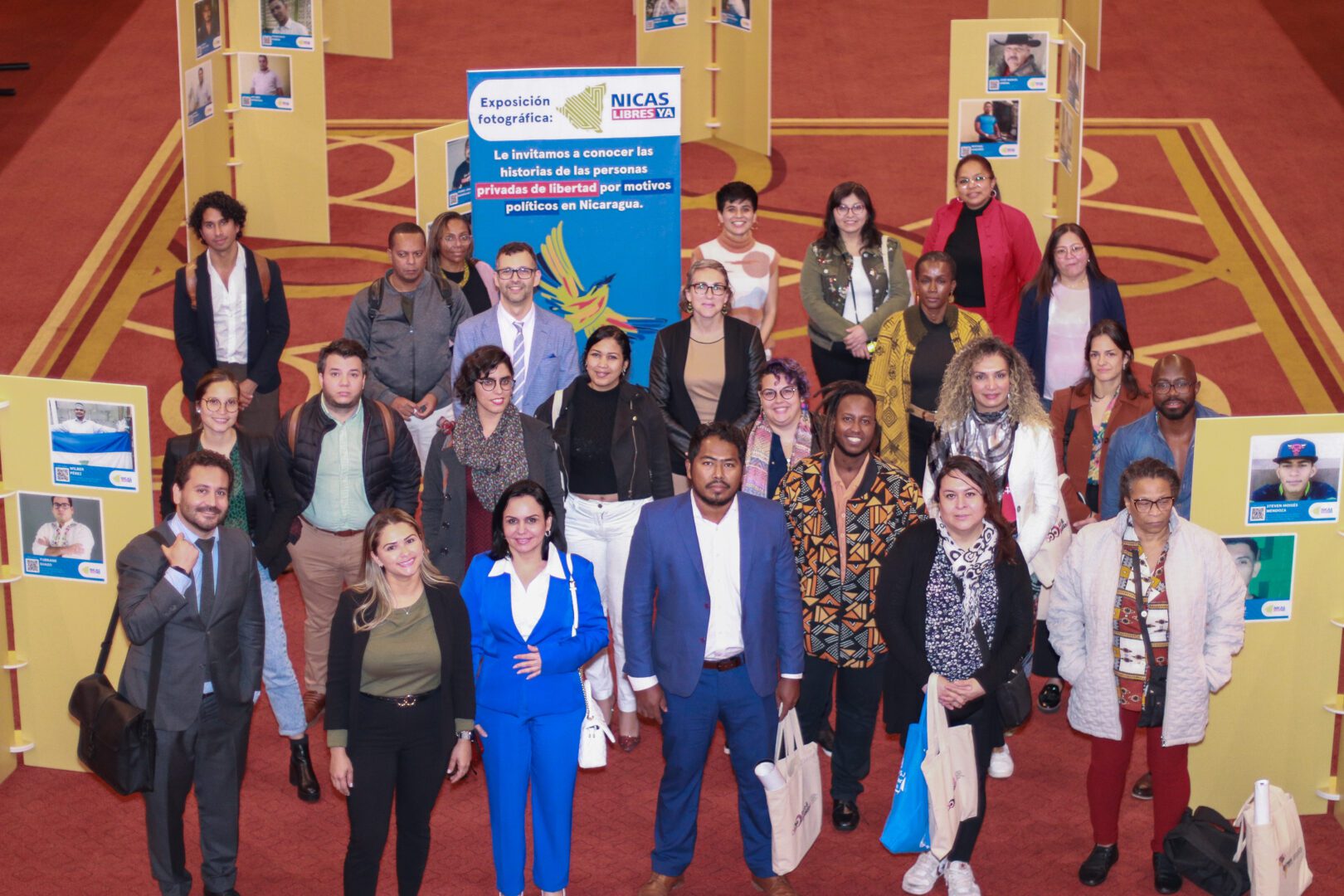
The Struggle for Racial Equality in Light of International Mechanisms: Race and Equality and Its Commitment to People of African Descent, Indigenous Peoples, and the Roma

The Struggle for Racial Equality in Light of International Mechanisms: Race and Equality and Its Commitment to People of African Descent, Indigenous Peoples, and the Roma

Washington, D.C., March 20, 2026.—On the occasion of the International Day for the Elimination of Racial Discrimination, the Institute on Race, Equality, and Human Rights (Race and Equality) reaffirms its commitment to combating structural racism and building more just, inclusive, and equitable societies in the Americas.

At Race and Equality, we work in close collaboration with individuals, communities, and peoples of African descent, Indigenous peoples, and the Roma, who continue to face historical and contemporary forms of discrimination that not only limit their ability to exercise their rights but also directly impact their living conditions, their access to opportunities, and their participation in society.

Far from being mere declarations, international human rights instruments establish specific obligations for states: to ensure substantive equality, eliminate discriminatory practices, recognize identities and cultures, and adopt specific measures to close historical gaps. In practice, however, these guarantees have not yet fully translated into structural changes.

At the international level, progress in recognizing the rights of Indigenous peoples and people of African descent has been essential to bringing these inequalities to light. Instruments such as the United Nations Declaration on the Rights of Indigenous Peoples not only recognize collective rights but also require states to respect self-determination, protect territories, and ensure effective participation in decisions that affect their lives.

Similarly, the process leading to a future United Nations Declaration on the rights of individuals, communities, and peoples of African descent represents a historic opportunity to establish standards that compel States to address the structural racism inherited from colonialism and slavery. This entails, for example, adopting public policies that guarantee equitable access to education, health care, employment, and justice, as well as recognizing and redressing the historical impacts of racial discrimination.

Nevertheless, Roma communities continue to face significant gaps in recognition within the international system, which results in their persistent invisibility in the Americas. This lack of recognition limits the adoption of specific public policies and perpetuates barriers to accessing basic rights.

Within the inter-American system, instruments such as the Inter-American Convention against Racism, Racial Discrimination, and Related Forms of Intolerance (CIRDI) reinforce these obligations by establishing that States must not only prohibit discrimination but also prevent, punish, and eradicate it through concrete actions. This includes collecting disaggregated data, recognizing affected communities, and designing public policies with their participation.

A recent example of these structural injustices was evident at the historic first hearing on the Roma people before the Inter-American Commission on Human Rights, held on March 9, 2026, and supported by Race and Equality. In this forum, Roma activists denounced how invisibility, structural racism, and the lack of state recognition continue to result in exclusion from the education system, barriers to accessing health services, and obstacles to accessing justice.

Such forums not only bring these issues to light but also reaffirm that states must move from formal recognition to effective action.

In the face of these challenges, at Race and Equality we reaffirm our commitment to:

  • Strengthening the effective participation of individuals, communities, and peoples of African descent, Indigenous peoples, and Roma in decision-making, both at the national level and in international forums.
  • Promote processes of memory, truth, justice, and reparations in the face of the legacies of colonialism, slavery, and structural racism.
  • Highlight and document persistent inequalities, supporting organizations and activists in the defense of their rights.
  • Incorporate an intersectional approach into all our actions, recognizing the multiple forms of discrimination faced by these populations.
  • Promote the ratification of the Inter-American Convention against Racism, Racial Discrimination, and Related Forms of Intolerance (CIRDI), recognizing that this instrument provides concrete tools for States to adopt regulatory frameworks in this regard.

On this March 21, we call on governments, international organizations, and civil society to redouble their efforts to eradicate racism in all its forms. Equality cannot remain a mere promise: it must be translated into policies, resources, and concrete actions that guarantee dignity and justice for all people.

Cuba’s independent civil society, ready for a democratic transition

For more than a decade, we have been fortunate to work with Cuba’s independent civil society. We have seen their commitment to human rights, their dedication to documenting the violations that happen in the country, and their courage in exposing them. We have witnessed—through urgent messages and calls that lead to reactions by our legal team—arbitrary detentions, summary trials, surveillance, harassment, raids, forced exile, and, more recently, blackouts and food and medicine shortages. We have also faced our own negative impacts from this work – personal and institutional attacks, as well as skepticism on the part of former allies who have questioned our human rights work in general because of our work exposing the Cuban reality.

As a capacity building organization, we have trained independent activists on and off the Island on civil society engagement with human rights protection mechanisms. Through systematic documentation of human rights violations – analyzed according to the international legal standards to which the Cuban State has adhered – we have supported them to denounce cases of torture, enforced disappearance, censorship, and discrimination before the Inter-American Commission on Human Rights and United Nations Treaty Bodies and Special Procedures. By advocating for Cuba’s compliance with its international human rights obligations, our partners have been laying the groundwork for democratic transition for years. Their work is not merely opposition; it is preparatory governance.

While Washington and Havana negotiate the future of the island nation, the work, dedication, and perseverance of independent activists, journalists, and artists on the Island and in exile to fight for human rights and promote democratic ideals should not go unrecognized. They are the ones who have been collecting and sharing the evidence of the Cuban regime’s atrocities and this documentation should serve as a key element of any future government transition. While the Cuban government has maintained a monolithic façade, a diverse and resilient independent civil society has been quietly building the architecture of a free society from the ground up. The future of Cuba cannot happen without them.

The international community has recognized that in any transitional justice process, five elements must be considered: truth, justice, memory, reparation, and guarantees of non-repetition. It is not possible to achieve any of these without records of what has occurred during the undemocratic era and Cuban human rights defenders have been preparing already, as independent journalists break the state monopoly on information (truth); independent lawyers file habeas petitions before Cuban courts and cases before the Inter-American Commission on Human Rights (justice); activists document patterns of abuses committed by State actors (memory); community groups provide aid where the State fails (reparation); and organizations like ours provide the tools to foster civic dialogue and democratic norms (non-repetition).

The most profound preparation lies in the commitment to the historical record. By creating databases of human rights violations and preserving the testimony of victims, independent groups are preventing the “erasure” that often follows authoritarian regimes. They understand that you cannot have justice without a record of the crime, and you cannot guarantee non-repetition if the history of the past is allowed to vanish into state archives. This is not just protest; it is the fundamental administrative labor required to restore the rule of law.

The international community must stop viewing Cuba as a passive recipient of history. The groundwork for a democratic transition—the human capital, the legal theories, and the civic courage—is already in place. The transition will not be a gift from the top down; it will be the formal recognition of a reality that independent civil society has been living for decades. Cubans are not waiting for democracy to be handed to them; they have been building it, brick by brick, in the face of immense adversity. It is time the world starts paying attention to the foundation they have laid.

Statement written by:

Carlos Quesada, Executive Director

Christina M. Fetterhoff, Director of Programs

  • Learn more about our work in Cuba over more than a decade here.


Three years since the release and exile of 222 Nicaraguans: memory, dignity, and justice pending

Washington, D.C February 9, 2026.– This February 9 marks three years since the release of 222 Nicaraguans who were arbitrarily deprived of their liberty for political reasons and who, after their release from prison, were forced into exile by the Ortega-Murillo regime. Their arrival in Washington, D.C., was made possible thanks to diplomatic and humanitarian efforts by the United States government, which facilitated their reception under conditions of protection.

Race and Equality was invited by the US State Department to provide technical support for this process, alongside civil society organizations and government institutions, offering immediate assistance to ensure dignified reception conditions, including accommodation, clothing, telephones, psychosocial support, and basic resources for their first days in the country.

Our team was able to witness first hand the serious physical, psychological and social impacts of political imprisonment, resulting from conditions of detention that included prolonged solitary confinement, cruel treatment, torture, and deprivation incompatible with human dignity. The documentation of these events helped to highlight patterns of repression that were later included in the Race and Equality report Patterns of Repression and Political Persecution in Nicaragua: From Prison to Freedom after Operation Guardabarranco.

Their release from prison did not mean justice. The regime not only expelled these 222 people from their country, but also arbitrarily stripped them of their nationality and legal existence in Nicaragua, constituting elements of crimes against humanity, as pointed out by the Group of Experts on Human Rights in Nicaragua. In their host countries, many of these people continue to face challenges related to their immigration status, access to employment, health care, family reunification, and integration, compounded by the risk of transnational repression.

Three years later, impunity persists. The serious human rights violations committed against these 222 people remain uninvestigated and unpunished, even though many of them have been granted provisional measures by the Inter-American Court of Human Rights, which the State of Nicaragua has failed to comply with.

At the same time, the human rights crisis in Nicaragua continues to deepen. Almost eight years after the repression of April 2018, persecution, surveillance, and arbitrary detentions persist. The regime has attempted to cover up this pattern through releases from prison under restrictive conditions, threats, and controls that do not amount to freedom, but rather reproduce mechanisms of intimidation and punishment.

Remembering this anniversary also means recognizing that the release of these 222 people was not a gesture, but the result of international pressure and coordination. Solidarity and coordinated action can save lives, but the repression is not over.

In this context, Race and Equality calls on host countries to continue facilitating the full reintegration and protection of victims of arbitrary imprisonment for political reasons in Nicaragua, as well as to maintain international vigilance in the face of ongoing crimes.

We reiterate our commitment to the victims of arbitrary imprisonment, denationalization, and all forms of repression in Nicaragua. We will continue to document, litigate, and advocate so that those responsible are held accountable and victims have access to truth, justice, and reparation.

We will continue working so that one day, not too far in the future, the political imprisonment and denationalization implemented by the Ortega-Murillo regime and its accomplices will be a bad memory of a dictatorship that, like all dictatorships, will come to an end due to the Nicaraguan people’s desire for freedom.

The release of 222 people was one step. Justice for all victims remains a pending debt.

Nicaragua: No Release Measure Will Be Enough as Long as the Ortega-Murillo Regime Keeps Its Repressive Structure Intact

Washington, D.C., December 3, 2025.– The Institute on Race, Equality and Human Rights (Race and Equality) expresses its satisfaction to learn that recently, the Ortega-Murillo regime has released people who were arbitrarily deprived of their liberty for political reasons. After months of unjust imprisonment, inhumane conditions, ill-treatment and isolation, we are comforted to know that these people will be able to reunite with their families and have better conditions for their care and attention.

So far, the authorities have not issued an official statement on these releases, but independent media and civil society organizations indicate that at least 12 people – including seven women – were released between Saturday, November 29 and Monday, December 1. In addition, at the beginning of the month, the release of three other people was announced.

According to this information, the releases have been registered as follows: on November 8, Leo Catalino Cárcamo Herrera, Julio Antonio Quintana Carvajal and Fabio Alberto Cáceres Larios, all older adults, were released. Subsequently, on November 29, it was learned about the release of at least eight people, including Carmen Sáenz, Lesbia Gutiérrez, Evelyn Guillén, Alejandro Hurtado Díaz, Eliseo Castro Baltodano, Evelyn Matus Hernández, Valmore Valladares and Mauricio Chavarría. Finally, on Monday, December 1, the release of Yolanda González Escobar, Carlos Vanegas, Luis Francisco Ortiz Calero and Octavio Enrique Caldera was reported.

According to the information available, as on other occasions, no indigenous leader has been released.

It should be noted that as of October 29, 2025, the Mechanism for the Recognition of Political Prisoners put the list of people deprived of liberty for political reasons at 77. We regret the regime’s lack of transparency since it does not report on arrests or on releases or changes in measures, which is due to its strategy to try to evade international scrutiny and responsibilities for the crimes committed.

We Demand Real Freedom

From Race and Equality we warn that these releases do not mean real freedom. The deprivation of liberty for political reasons in Nicaragua is not limited to being inside a physical prison: the repressive pattern of the regime can impose measures that continue to restrict fundamental rights, including: house arrest, constant surveillance, the obligation to report daily, threats, police harassment and the impossibility of exercising civil and political rights. The closure of civic space makes it impossible to freely exercise freedom of expression due to the certainty that reprisals will be taken. These practices constitute widespread forms of repression and social control that keep victims in a permanent state of risk and persecution.

We urgently call on the Nicaraguan State to immediately release all people arbitrarily detained for political reasons and to cease all forms of criminalization, harassment and reprisals against opponents, human rights defenders, journalists, territorial leaders and critical voices. We also urge the international community to continue to closely monitor the situation and to redouble efforts to demand the full, unconditional and guaranteed release of all persons deprived of liberty for political reasons in the country and for those who continue to be in a situation of enforced disappearance.

Race and Equality reaffirms its commitment to the victims, their families, and civil society organizations that continue to document and denounce human rights violations in Nicaragua, and reiterates that no measure of release will be sufficient as long as the regime maintains its repressive structure intact.

Race and Equality Condemns the Torture and Threats Against José Daniel Ferrer, Who Announced His Willingness To Go Into Forced Exile

Washington, D.C., October 7, 2025. – The Institute on Race, Equality, and Human Rights (Race and Equality) expresses its concern over the announcement by Cuban activist José Daniel Ferrer, leader of the Patriotic Union of Cuba (UNPACU), who stated that he is willing to accept forced exile as the only alternative to protect his life and that of his family, after years of torture, threats, and inhumane treatment suffered in prison and while on parole.

In a letter written from the Mar Verde Penitentiary and released on Friday, October 3, Ferrer denounced the serious human rights violations he has faced because of his activism. “For years I have been subjected to brutal beatings, torture, humiliation, death threats, and other cruel, inhuman, and degrading treatment by henchmen and other instruments of the worst dictatorship the American continent has ever known,” Ferrer wrote.

Race and Equality has repeatedly denounced the violence against José Daniel Ferrer and the conditions of his imprisonment before the Inter-American Commission on Human Rights (IACHR). The activist also reported threats against his wife and children, which have led him to consider forced exile as the only way to safeguard his integrity and that of his family. “I have reached the limit of what a human being can endure. If leaving the country is the only option to protect my loved ones, I am willing to accept it,” he added.

“Ferrer’s statements confirm the extreme level of persecution and cruelty faced by those who defend human rights in Cuba. His willingness to accept forced exile reflects the desperation of an activist who has been the victim of torture and systematic repression for years,” said Carlos Quesada, Executive Director of Race and Equality.

Ferrer, 55, is one of Cuba’s most renowned activists. He was one of the 75 prisoners of conscience convicted during the Black Spring of 2003 and, since then, has been subjected to repeated arrests, torture, and arbitrary judicial proceedings. He participated in the historic demonstrations on July 11, 2021, after which he was arbitrarily detained and, in January of this year, released on parole. However, on April 29, he was re-imprisoned in the Mar Verde prison.

The allegations made by the human rights defender reignite one of the most persistent repressive practices of the authoritarian Cuban regime: forced exile, a strategy that violates fundamental rights and that the authorities use to neutralize leaders, silence critical voices, and strip activists, artists, and journalists of their roots and family ties. This practice is in addition to other forms of repression—such as arbitrary judicial proceedings, harassment, censorship, and systematic persecution—whose objective is to limit or nullify the political and social participation of those who defend human rights in Cuba.

Over the past years, this strategy has affected various activists and journalists in Cuba, who have been forced to leave the country after years of repression, threats, and imprisonment. Recently, Cuban activist Aymara Nieto, also represented by Race and Equality before the IACHR, a member of the Ladies in White organization and UNPACU, left the island to settle in the Dominican Republic on August 11, 2025. Nieto, who had been imprisoned since 2018, was released on the condition imposed by State Security that she leave Cuba. “I was imprisoned until the very last moment I was at the airport. They were the ones who took me. They never let me go home,” said the human rights defender. She traveled accompanied by her husband, fellow activist Ismael Boris Reñí, and two of her daughters, after serving two consecutive sentences in a Havana prison.

At Race and Equality, we strongly condemn the torture, threats, and reprisals faced by José Daniel Ferrer, and we warn of the seriousness of his situation in prison. Ferrer’s case highlights the continuation of a pattern of repression that, in the last years, has forced numerous activists, defenders, and independent journalists in Cuba into exile. We urge the international community to redouble its efforts to demand his immediate release, as well as the protection of his family and all human rights defenders in Cuba and in exile.

We also urgently call on the United Nations, the IACHR, and the democratic governments of the region to intervene decisively to guarantee Ferrer’s physical and psychological integrity and to put an end to the persecution and forced exile of Cuban dissidents.

Race and Equality reports on the forced disappearances for women in Nicaragua and Cuba to the United Nations Committee

Washington, D.C., September 10, 2025.– The Institute on Race, Equality and Human Rights (Race and Equality) participated in the regional consultation of the Committee on Enforced Disappearances (CED) as part of its general comment on women, girls and enforced disappearances.

The objective of this CED initiative, which was held virtually on September 3, was to provide spaces for exchange with international organizations, civil society organizations, and interested people in the region to identify challenges, lessons, and specific and contextual recommendations that feed the content of the general comment.

In particular, the Committee was interested in receiving information on: a) addressing the gender and intersectional perspective; b) the differentiated impacts and the inequalities and specific circumstances of women and girls that affect the exercise of their rights; c) contexts that put women and girls at particular risk; d) the role of women as human rights defenders and peacebuilders and; e) the measures available to victims of enforced disappearance, including women searchers, to give effect to the rights enshrined in the International Convention for the Protection of All Persons from Enforced Disappearance.

Race and Equality presented information on Nicaragua and Cuba

In the case of Nicaragua, Race and Equality reported on cases of women who were disappeared during some point of their arbitrary detention for political reasons, particularly highlighting the cases of some of the 11 women who are still missing today, after being deprived of their liberty, according to data from the Mechanism for the Recognition of Political Prisoners in Nicaragua.

We share the cases of violations of their rights, with special emphasis on the challenges faced by women searchers, the violations of rights to which they may be subjected, and the differentiated inter-American standards that apply to them for their comprehensive protection and care.

As for Cuba, the Institute took the case of the women who are members of the organization Ladies in White (Damas de Blanco) to the CED, providing information on how these women are deprived of liberty every Sunday when they try to attend mass, generally for periods of between 1 and 4 hours, but in some cases extending up to 72 hours, without leaving any type of record in official records.

This pattern, which corresponds to what the CED identified in its “Joint Declaration on the so-called short-term enforced disappearances as a form of enforced disappearance”, iscombined with a practice of sexualized treatment of these women that includes everything from insults based on their gender at the time of deprivation of liberty to particular threats and strategies that seek to generate fear in women at the time of their release, having a differentiated impact compared to the forced disappearances of men.

The Committee thanked Race and Equality for its interventions in making it aware of issues that had not been made visible in the framework of the regional consultation and for presenting novel approaches in the analyses carried out. It should be noted that the case of the Ladies in White was the only one that was presented with respect to Cuba, which shows the need to reinforce the tasks of making visible what is happening on the island.

At Race and Equality, we maintain a strong commitment in this regard and we will continue to advocate with mechanisms of the Universal System and the Inter-American Human Rights System to denounce the situation of forced disappearance in Latin America, especially in countries such as Cuba and Nicaragua, where this problem is determined and aggravated by authoritarian regimes.

Nicaragua: Raids Carried Out by the Ortega-Murillo Regime Reveal New Escalation of Repression

Washington, D.C., August 18, 2025. – The Institute on Race, Equality, and Human Rights (Race and Equality) strongly condemns the recent police raids carried out by the Ortega-Murillo regime in the departments of Carazo, Granada, Masaya, and Rivas, which left at least 27 people detained between August 14 and 16.  as denounced and documented by the Blue and White Monitoring (MAB). Four of those people have reportedly been released and 23 remain arbitrarily detained for political reasons.
Most of those arrested are political releases, returned exiles, artists and opposition businessmen. The operations were marked by violent raids, looting, use of canine technique and night detentions, in a context marked by the recent confiscation of the San José School in Jinotepe, Carazo.
According to the MAB report, among those arrested in Carazo in this new offensive are the former political prisoner and returned exile Óscar Velásquez Sánchez, the painter Marvin Campos Chavarría, María José Rojas Arburola, daughter of the assassinated opponent Rodolfo Rojas; Chester Cortés, from the Cementerio neighborhood; tattoo artist Darwin Ayerdis – missing since his capture in July – as well as Mario Rodríguez Serrano and Halder López Luna, the latter arrested after voluntarily presenting himself to the police.
The arrests occurred days after co-dictator Rosario Murillo announced on August 12 the confiscation of the San José school, in Jinotepe, under the alleged argument that torture was carried out in that center during April 2018. The confiscated school was administered by the nuns of the Josephine congregation, which represents another step in the regime’s onslaught against the Catholic Church.
It is with deep concern that the regime does not abandon the pattern of arbitrary detentions for political reasons in order to keep the population afraid to express themselves.
“It is unacceptable that in Nicaragua the practice of detaining people and subjecting them to forced disappearance persists, leaving their families in absolute uncertainty and pain. No one should live in fear of never seeing their loved ones again. This is a very serious violation of human rights that must cease immediately,” said Carlos Quesada, Executive Director of Race and Equality.
We demand that the families of the affected people be informed of their whereabouts and that they be released immediately. We also demand that the repression against the Nicaraguan Church cease and that religious freedom and the properties and educational centers owned or administered by the Church be respected.

Murder of Roberto Samcam: An Abominable Crime that Sets Off Alarms about the Infiltration of Nicaraguan Military Intelligence in Costa Rica

Washington, D.C., June 20, 2025 – The Institute on Race, Equality and Human Rights (Race and Equality) strongly condemns the murder of retired Nicaraguan Army Major Roberto Samcam, which occurred early Thursday morning, June 19, in San José, Costa Rica. This crime shows that the risk to the integrity and life of people who oppose or are perceived as such by the dictators Daniel Ortega and Rosario Murillo transcends borders, so this abominable act, added to other attacks that have been recorded, should turn on the alerts of the Costa Rican institutions to ensure justice.

Civil society organizations in exile, the Group of Experts on Human Rights in Nicaragua and other mechanisms for the protection of human rights have warned about transnational repression, pointing out the existence of persecution and reprisals applied outside Nicaraguan territory, which to date has manifested itself in attacks and murders such as the one we condemn today, as well as through the refusal to issue passports or to enter Nicaragua, leaving hundreds of Nicaraguans in a situation of de facto statelessness.

Race and Equality is deeply concerned about the presence of Nicaraguan military intelligence infiltrators in Costa Rica and their links to the assassinations and attacks against the opposition in the country, where they were forced to go into exile to save their lives and personal integrity.

“What we face today is not only a heinous crime, but a demonstration of the extent to which a regime can go when impunity is allowed to cross borders. As an international human rights organization, we are deeply concerned about the weakening of safe spaces for Nicaraguan exiles. Defending the lives and freedom of those fleeing persecution must be a priority for the international community,” said Carlos Quesada, Executive Director of Race and Equality.

We hope that the Costa Rican authorities will thoroughly investigate the murder of retired Major Roberto Samcam – who was a well-known critic of the dictatorial regime headed by Ortega and Murillo – and determine the material and intellectual authors of this crime.

We denounce that, in this way, the Nicaraguan dictatorship is attempting to silence the opposition, even beyond its borders. Critical speech is protected by international human rights instruments and deserves all necessary protection. The crime against Roberto Samcam, defender of democracy and human rights, must not go unpunished.

Finally, we urge the Costa Rican authorities to guarantee the safety of Nicaraguan opponents residing in the country, as well as an adequate environment for them to express themselves without fear of reprisals.


CSW69: A Key Space for Women’s Rights in Latin America and the Caribbean

CSW69: A Key Space for Women’s Rights in Latin America and the Caribbean

Washington, D.C., March 7, 2025 – In 2025, the world commemorates the 30th anniversary of the Fourth World Conference on Women and the adoption of the Beijing Platform for Action, a key milestone in the struggle for gender equality. In this context, the 69th session of the United Nations Commission on the Status of Women (CSW69), to be held from March 10-21 in New York, represents a crucial opportunity to assess progress, identify persistent challenges, and renew commitments towards the full realization of women’s rights.

In the framework of this March 8, International Women’s Day, from the Institute on Race, Equality and Human Rights (Race and Equality) we recognize the importance of this space to encourage progress for the promotion, protection, and guarantee of women’s rights, especially those of Afro-descendant, Indigenous, and LBT (lesbian, bisexual, and trans) women, as they continue to be marginalized in decision-making spaces and face specific violence that makes them even more invisible and limits their access to fundamental rights.

In this scenario, the participation of civil society is essential to ensure that the voices of women in the region are heard and taken into account in the global agenda. As Race and Equality, we reaffirm our commitment to the promotion and defense of women’s rights in Latin America and the Caribbean, which is why we will be accompanying the participation in the CSW69 of representatives of the Continental Network of Indigenous Women of the Americas (ECMIA).

This is the second consecutive year in which we have accompanied ECMIA’s participation. In 2024, at the 68th session of the Commission on the Status of Women (CSW68), we were present in an extensive schedule of official activities and side events. At that time, discussions focused on the economy and the impact of poverty on the lives of Indigenous women, approached from an intergenerational, intercultural, gender equality, and individual and collective rights perspective. 

A Challenging Panorama

In Latin America and the Caribbean, the gap between international commitments and reality remains profound. Despite normative advances, women – especially those facing multiple forms of discrimination, such as Afro-descendant, Indigenous, LBT and women human rights defenders – continue to suffer high levels of violence, economic inequality, and restrictions on their political participation. The region also remains one of the most dangerous for women human rights defenders, with killings, criminalization, and harassment in response to their activism. 

These challenges are compounded by the advance of anti-rights groups that seek to reverse the gains made in gender equality. From disinformation campaigns to regressive legal reforms, these sectors promote narratives that delegitimize the feminist struggle and threaten fundamental rights. The growing influence of these groups in political and media spaces represents a serious obstacle to the construction of more just and equitable societies.

It is urgent that States reinforce their commitments to the Beijing Platform for Action and the 2030 Agenda by adopting effective policies that address structural inequalities and ensure safe environments for all women. The CSW69 should not only be a space for evaluation, but a turning point to achieve concrete changes.

At a time of human rights setbacks in several countries in the region, we raise our voices to demand that gender equality be a real priority and not just a commitment on paper. The fight for women’s rights in Latin America and the Caribbean cannot wait.

Human Rights and Strategic Litigation: Towards a Transformation of International Standards

  • In commemoration of International Human Rights Day, Race and Equality offers a comprehensive look at four cases that are being litigated before the Inter-American Human Rights System.

Washington, DC; December 10, 2024.– In the process of promoting and defending human rights, strategic litigation represents a key front of the struggle. For this reason, it is one of the four pillars of work for the Institute on Race, Equality and Human Rights (Race and Equality).

With the idea that access to justice is fundamental to guarantee and protect human rights, Race and Equality litigates alongside victims and allied organizations, before human rights mechanisms at the Inter-American and universal levels, carrying out this work in two ways.

There is the emergency legal response, which is activated when counterparts face risks of violation of their human rights, and the Race and Equality Legal Team supports them in the documentation and timely submission of requests for protection and intervention before the Inter-American System and/or the Universal System.

Litigating before the IAHRS

To achieve comprehensive justice for victims and promote long-term, sustainable, and structural changes for greater protection of human rights, Race and Equality also conducts strategic litigation through constant coordination with civil society counterparts.

In commemoration of the International Day of Human Rights, Race and Equality presents four cases that are currently being litigating before the Inter-American Human Rights System (IAHRS), offering a comprehensive look at the facts of each case, their procedural status and, in collaboration with victims, relatives, and allied organizations, what we seek in terms of jurisprudence and transformation of international standards.

Race and Equality is currently litigating before the IAHRS 10 cases (3 vs. Nicaragua, 2 vs. Colombia, 3 vs. Cuba, 1 vs. Peru, and 1 vs. Mexico), for violation of human rights of 157 individual victims and three collective victims); each case is in a different procedural status. In 31 cases we seek protection before the Universal System and the IAHRS (13 from Nicaragua,  3 from Colombia, 14 from Cuba, and 1 from Brazil), in favor of 401 individual beneficiaries and two collective beneficiaries. The people and groups represented belong to the populations with whom the organization has worked since its inception: Afro-descendants, Indigenous people, LGBTI+ people, women community leaders, human rights defenders, and victims of political repression.

In addition, in compliance with the institutional vision of Race and Equality, the cases are approached from an intersectional perspective.

It is important to mention that the work of strategic litigation is intertwined and reinforced by the other pillars of the work of Race and Equality, which are advocacy, documentation, and strengthening the capacities of counterparts. Learn more here.

  • Petition of the Ladies in White (Cuba): Comprehensive Protection of the Right to Defend Human Rights

For their work in defense and promotion of human rights in Cuba, the Ladies in White are continuously threatened, harassed, persecuted, and repressed by state agents and are detained every week for hours or days, some of them being in arbitrary detention for political reasons. During the last few weeks, its President, Ms. Berta Soler, has been detained and forcibly disappeared on three occasions for almost 3 days.  In 2013, the Inter-American Commission on Human Rights (IACHR) granted precautionary measures in favor of all the members of the organization, which are still in force; and in 2022 Race and Equality filed a petition for the human rights violations caused to the women who make up the Ladies in White and to the organization itself.

Currently, the deadline for the State to submit its observations on admissibility and merits is running, and the IACHR will subsequently be able to rule on the State’s international responsibility in this case.

Through the precautionary measures, a letter of allegation before the Special Procedures of the Human Rights Council, and actions before other United Nations bodies, Race and Equality seeks to guarantee the protection of the rights to life, personal integrity, personal liberty, freedom of thought and expression, to association, and to exercise the right to defend human rights and freedom of expression.

The petition alleges that the State of Cuba is internationally responsible for the violation of the rights to life, liberty, security, and integrity of the person, equality before the law, protection of honor, the constitution and protection of the family, the preservation of health and well-being, and protection against arbitrary detention for political reasons to the detriment of victims.

  • Petition of Kevin Solís (Nicaragua): Protection of Human Rights Defenders as Key Actors for the Strengthening of Democracy

The case of Kevin Solís is an example of the pattern of repression suffered by students who denounced human rights violations during the 2018 social unrest in Nicaragua. Between 2018 and 2020 he was deprived of his liberty on two occasions, being a victim of torture and punishment in prison, in addition to his academic records from the public university being destroyed. On February 9, 2023, Kevin Solís was released from prison, exiled to the United States, and stripped of his nationality.

Given the risk of the situation faced by Solís, the IACHR granted him precautionary measures and he was later the beneficiary of provisional measures ordered by the Inter-American Court of Human Rights (IACtHR). In August 2023, Race and Equality filed a petition with the IACtHR denouncing the human rights violations committed by the State against it. The provisional measures are in force, while the petition is awaiting processing by the IACtHR.

With the strategy used in this case, we seek to protect human rights defenders as key actors in strengthening democracy, as well as to denounce arbitrary detentions through the use of legislation contrary to international standards to criminalize freedom of expression. This case will also contribute to the documentation of the human rights violations that have occurred since the beginning of the crisis for a) pressure from the international community and b) subsequent accountability, reparation, and the establishment of guarantees of non-repetition.

  • Precautionary Measures of Benny Briolly (Brazil): Guarantee for the Political Participation of Black People with Diverse Gender Identities

Benny Briolly Rosa da Silva Santos is a black travesti councilor elected in the City of Niterói, who was reelected in 2024 and who, from 2017 to date, faces a serious situation of attacks aimed at her gender identity and race, also affecting her advisory team. Such attacks, which are manifested through discriminatory content and death threats against them, were frequently used to provoke fear and insecurity in their political actions in defense of human rights. Faced with this situation, the organizations Criola, Terra de Direitos, Justiça Global, Instituto Marielle Franco, Instituto de Defesa da População Negra, and Race and Equality, requested precautionary measures before the IACHR, which were granted on June 11, 2022.

The organizations representing the beneficiary have sought the permanent implementation of precautionary measures and to put an end to the risks faced by Briolly and her team, without fully achieving it so far, since the State has not carried out the appropriate and timely actions to do so.

With the other representative organizations, we seek the effective protection of the Councilor and that the State of Brazil guarantees the political participation of black people with diverse gender identities.

  • La COMADRE (Colombia): Right to Collective Reparation for Women Ethnic Leaders

Community leaders of the Coordination of Displaced Afro-Colombian Women in Resistance (La COMADRE), an autonomous organization of women victims of the armed conflict who have been victims of sexual violence and forced displacement, continue to face multiple forms of violence due to their leadership. These are mainly people who belong to rural ethnic communities, who have been forcibly displaced in urban contexts in the face of the armed conflict and violence that persists in their ancestral territories.

In this context, La COMADRE demanded that the State of Colombia be recognized as an ethnic collective subject with the right to collective reparation through free, prior, and informed consultation. Despite having achieved this recognition, it has not been granted such reparation, so together with the Association of Displaced Afro-Colombians (AFRODES), ILEX Legal Action, Race and Equality presented in 2022 a petition to the IACHR against the violations perpetrated against the organization by the State and the violence and risks that the women leaders who make up the organization continue to face. The petition was opened for processing and is awaiting the IACHR in the admissibility and merits stages.

This case seeks, first, that collective reparation be granted to La COMADRE as an ethnic collective subject, after exercising the right to consultation to determine such reparation; guarantees for the cessation of violence and risks faced by Afro-Colombian women leaders who are victims of the armed conflict, as well as identification and punishment of those responsible and structural changes to ensure that Afro-Colombian women can defend their human rights by exercising their leadership in conditions of safety for themselves, their families, and their organization.

Join Our Efforts

Help empower individuals and communities to achieve structural changes in Latin America.